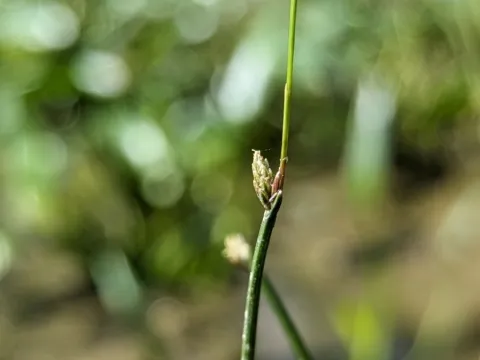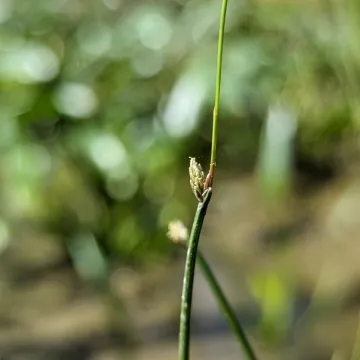
Eleocharis pellucida
Eleocharis pellucida
Description
Eleocharis pellucida is a perennial herbaceous plant belonging to the Cyperaceae family. Often referred to as a species of spike-rush, this plant is primarily a hydrophyte, thriving in environments characterized by high moisture content, such as marshlands, riverbanks, and water-logged soil habitats.
The native range of this species extends across East and Southeast Asia. It has adapted to various climatic conditions within these regions, ranging from temperate to subtropical environments. Its evolutionary success is tied to its ability to colonize niches that remain permanently wet, providing it a competitive advantage over non-aquatic flora.
Botanically, the plant is characterized by slender, filament-like stems that rise from a creeping rhizome system. This rhizomatous growth allows it to form dense mats or colonies. The leaves are significantly reduced, appearing as sheaths at the base of the stems, which is a structural adaptation that helps the plant minimize water loss while remaining submerged or partially emergent.
Cultivation requirements involve ensuring a consistently moist substrate. Ideally, the plant prefers silty or sandy-loam soils enriched with organic matter. In nursery conditions, managing the water level is the most critical factor, as it must mimic the natural wetland habitat to prevent the plant from drying out. Adequate light exposure is preferred, though it can tolerate partial shading.
The primary economic use of Eleocharis pellucida is in landscape design, specifically for aquascaping and natural pond filtration systems. It serves as an excellent stabilizer for shorelines and a biological filter for excess nutrients. While generally hardy, the plant should be monitored for fungal issues if water circulation is poor, although it remains largely resistant to most common agricultural pests.
Photo gallery