Beaked spikerush
Eleocharis rostellata
Description
Beaked spikerush (Eleocharis rostellata) is a perennial herbaceous plant belonging to the Sedge family (Cyperaceae). This species is scientifically notable for its unique method of propagation, where the arched stems touch the ground and take root at the tips, creating new clusters and allowing the plant to form expansive colonies over time.
The native range of this species extends across North and South America, primarily within wetlands, salt marshes, and saline meadows. Its ability to tolerate varying degrees of soil saturation makes it a highly valuable species for environmental restoration projects and water management in artificial habitats.
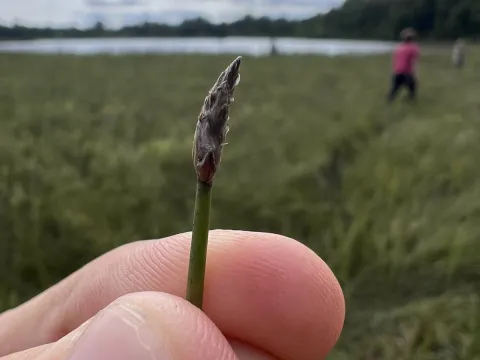
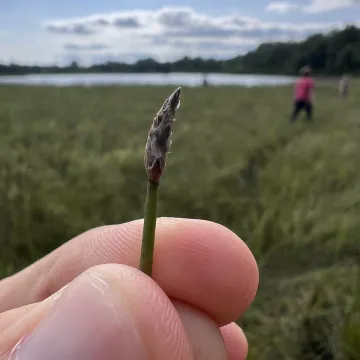
Botanically, the plant is characterized by slender, wire-like stems that form dense, clumped mounds ranging from 30 to 80 centimeters in height. The leaves are reduced to sheath-like structures at the base of the stems. The inflorescence is a solitary spikelet located at the tip, which is a diagnostic feature used to distinguish it from other members of the Eleocharis genus.
Agricultural and horticultural requirements focus on maintaining high moisture levels in the substrate. The plant thrives in full sun, as it requires high light intensity for optimal tiller development. In cultivation, it is essential to ensure that the root zone remains consistently wet, as the species does not tolerate extended periods of drought, which can lead to rapid senescence.
The economic and environmental use of Eleocharis rostellata includes several key areas:
- Restoration of degraded shoreline habitats and erosion control.
- Phytoremediation of water bodies, specifically the sequestration of excessive nutrients.
- Use in ornamental landscaping for naturalistic ponds and rain gardens.
The plant is relatively resistant to pests and diseases under appropriate environmental conditions. Common issues like stem rot or fungal infections usually arise only in stagnant, anaerobic conditions where water circulation is poor. Proper management of water quality and preventing the accumulation of organic debris is the most effective strategy to ensure plant health and longevity.
Photo gallery