Giant spike rush
Eleocharis sphacelata
Description
Giant spike rush (Eleocharis sphacelata) is a perennial aquatic plant belonging to the Cyperaceae family. It is recognized in agricultural and environmental management for its robust growth habit and its significant capacity to provide structural integrity to wetland ecosystems and man-made aquatic facilities.
The species is native to Australia, New Zealand, and surrounding regions, thriving in freshwater environments such as marshes, lakes, and slow-moving streams. Its natural range extends across various climatic zones, provided there is an adequate and consistent water supply throughout the year, which is essential for the plant's survival and rhizome development.
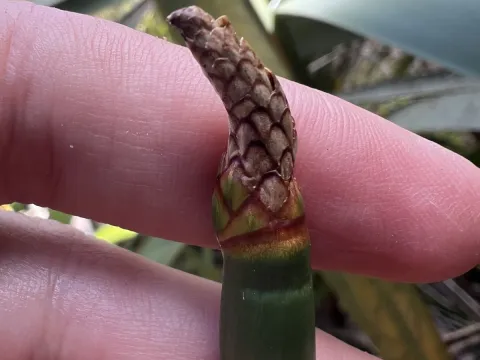
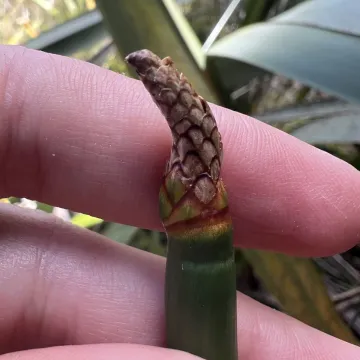
Botanically, Eleocharis sphacelata is characterized by erect, hollow, cylindrical stems that feature internal transverse septa, giving them a distinct ladder-like appearance when cut longitudinally. The plant produces long, creeping rhizomes that allow it to form dense colonies, effectively anchoring the substrate and reducing sediment movement caused by water motion.
Cultivation requirements involve specific attention to water depth and soil composition. The plant performs best in soft, organic-rich substrates like silt or peat. While it is adaptable to various water levels, excessive salt content or severe water pollution can inhibit its growth. In an agricultural setting, regular monitoring of water quality is necessary to ensure the plant remains productive and healthy.
The primary agricultural and environmental uses for this plant include:
- Phytoremediation: removing nitrogen and phosphorus from agricultural runoff.
- Erosion control: stabilizing banks of irrigation canals and ponds.
- Wildlife support: providing essential habitats for waterbirds and aquatic invertebrates.
- Ornamental use: creating naturalistic water features in landscaping.
Typical plant health challenges include fungal leaf spots and root rots, which usually occur when water stagnation is accompanied by high temperatures. Insect pests such as certain beetles and larvae may occasionally impact stem density. Management strategies focus on promoting balanced water flow and ensuring that the planting site is not overcrowded, which helps maintain natural resistance to disease outbreaks.
Photo gallery