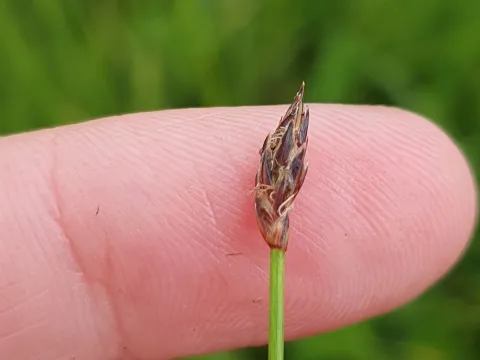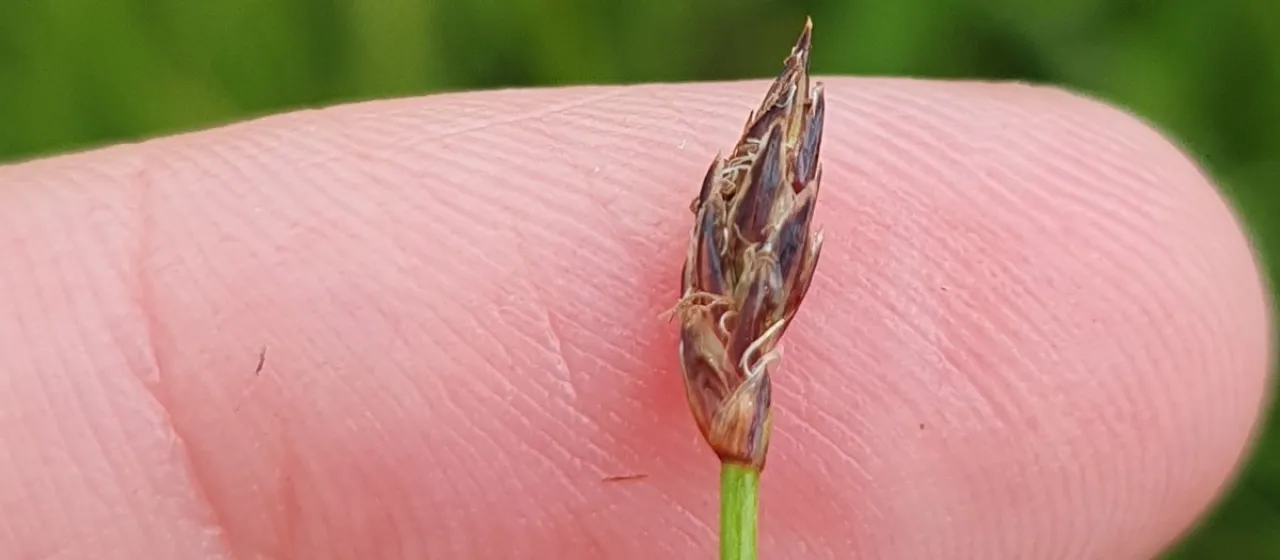
Description
Uniglum spikerush (Eleocharis uniglumis) is a perennial herbaceous plant belonging to the sedge family (Cyperaceae). In agricultural science, it is recognized as a specialized species adapted to waterlogged and saline soil conditions where traditional forage crops fail to establish.
Native to vast regions of Eurasia and North America, this plant is primarily found in wetland habitats, coastal marshes, and riparian zones. Its cultivation potential is centered on its utility as a soil-binding agent and a forage source in areas subject to fluctuating water tables and environmental stress.
Botanically, the plant grows from creeping rhizomes, forming dense tufts of slender, dark green culms reaching up to 40 cm in height. The inflorescence is a solitary, terminal spikelet that provides the characteristic look of the Eleocharis genus. Its root system is exceptionally dense, aiding in the stabilization of loose sediments.
Climate and soil requirements for this species are specific: it thrives in permanently moist, often anaerobic soils. It exhibits a remarkable tolerance for soil salinity, which makes it an ideal candidate for managing marginal lands that are unsuitable for conventional tillage or standard pasture improvement.
- Adaptation to waterlogged environments
- High tolerance for moderate salinity
- Excellent erosion control properties
- Low requirement for commercial fertilizers
The agricultural application of Uniglum spikerush is mainly associated with meadow management in low-lying areas. It provides valuable green biomass that can be harvested as hay, contributing to sustainable livestock grazing in marshy regions where conventional equipment cannot operate effectively.
The plant is relatively resilient, though it can be affected by fungal pathogens such as rusts during periods of stagnant water and high humidity. Insect pests typically do not pose a significant threat to established stands, as the plant's robust regenerative capacity allows it to recover quickly from minor infestations.
Photo gallery