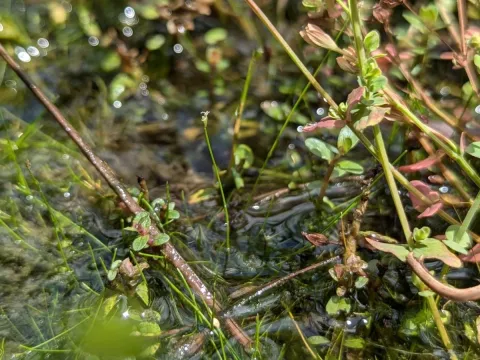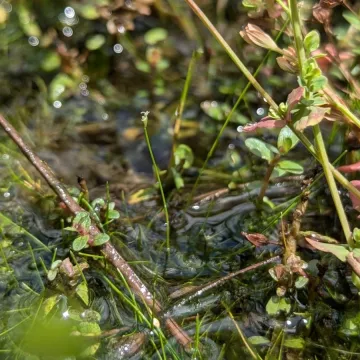
Yokosuka spikerush
Eleocharis yokoscensis
Description
Yokosuka spikerush (lat. Eleocharis yokoscensis) is a perennial herbaceous plant belonging to the Cyperaceae family. Within the agricultural and ecological framework, this species is recognized as a specialized hydrophytic crop, well-adapted to wetland environments, marshy habitats, and water-logged soil conditions.
The plant originates from East Asia, with a broad distribution spanning Japan, the Korean Peninsula, and parts of the Russian Far East. Its natural habitat is typically characterized by moist, nutrient-rich substrates found along riverbanks, in floodplains, and in stagnant shallow waters, where it thrives under temperate climate conditions.
Botanically, this species is defined by its creeping rhizome system, which facilitates rapid vegetative propagation and the formation of dense, carpet-like colonies. The stems are slender, cylindrical, and leafless, reaching heights of 20–50 centimeters. The reproductive structures consist of small, terminal spikelets that contain the plant's flowers, ensuring dispersal through both seeds and rhizome division.
Cultivation requirements for Yokosuka spikerush primarily revolve around consistent moisture levels. The crop performs best in fertile, silt-rich soils that maintain high water content throughout the growing season. Adequate sunlight is essential for optimal development, as the plant shows reduced vigor in shaded areas. Maintaining water quality and proper soil aeration is critical to preventing root zone hypoxia.
The primary agricultural and practical applications include:
- Phytoremediation of aquatic environments and natural water purification systems.
- Application in landscape architecture for the stabilization of pond margins.
- Use as an environmental indicator to monitor the health of wetland ecosystems.
Concerning pests and diseases, the plant is generally resilient; however, it can be susceptible to root rot pathogens under conditions of low water circulation and high organic debris accumulation. Management strategies should focus on maintaining water flow, preventing excessive nutrient loading in the water, and regular monitoring for signs of stress in the vegetative tissue.
Photo gallery