Description
Ericameria ericoides, commonly known as Mock Heather, is a hardy perennial shrub belonging to the Asteraceae family. This species is highly regarded in sustainable horticulture for its resilience and ability to thrive in challenging, resource-poor environments where other plants struggle to survive.
The plant is native to the coastal regions of California, USA. Its natural range is predominantly restricted to coastal dunes, sandy bluffs, and open scrublands. This evolutionary history in rugged coastal habitats has equipped the species with high tolerance to wind exposure and sandy, nutrient-poor soil substrates.
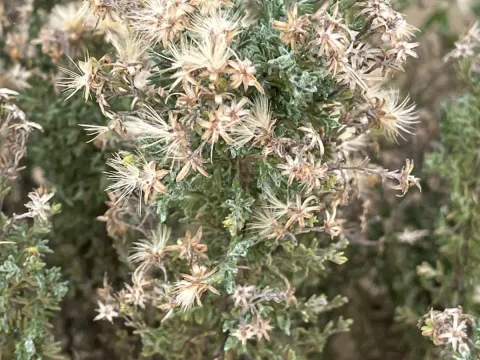
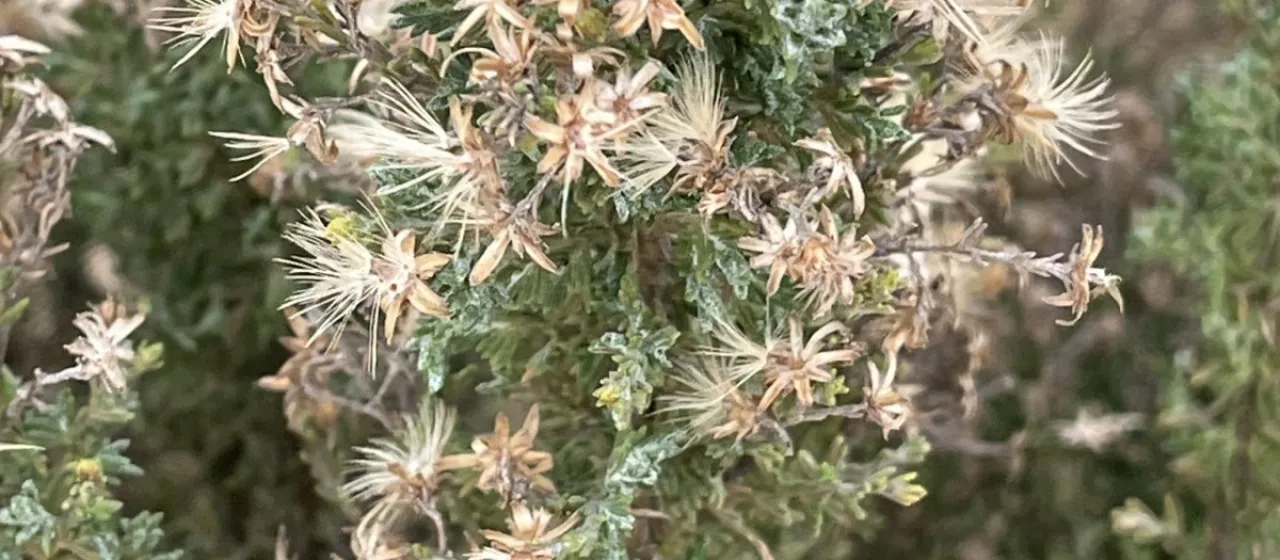
Morphologically, the shrub features dense branching with fine, heath-like leaves that are often glandular and aromatic. It typically reaches heights of up to one meter. During the late summer and autumn, the plant produces abundant clusters of small, bright yellow flower heads that provide a significant late-season nectar source for local pollinators.
Cultivation requirements for Ericameria ericoides are simple but specific. The plant demands full sun exposure and excellent drainage. It performs best in sandy or rocky soils and requires virtually no irrigation once established. Over-watering and heavy, clay-based soils should be avoided at all costs to prevent root rot.
Its primary horticultural use is in xeriscaping and ecological restoration projects. It is an excellent candidate for stabilizing sandy soil and mitigating erosion on slopes. Furthermore, because of its low-maintenance nature, it is widely utilized in water-wise landscapes where irrigation systems are absent or limited. The plant exhibits high natural resistance to most pests and diseases, contributing to its status as a low-input agricultural and landscaping asset.
Photo gallery