Palmer's goldenbush
Ericameria palmeri
Description
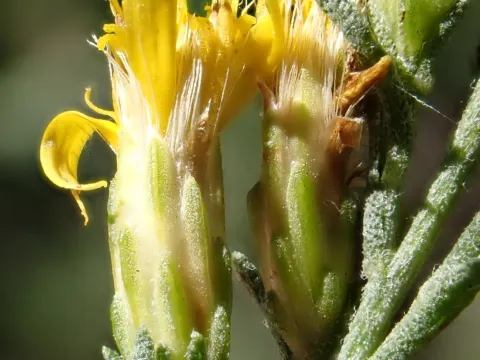
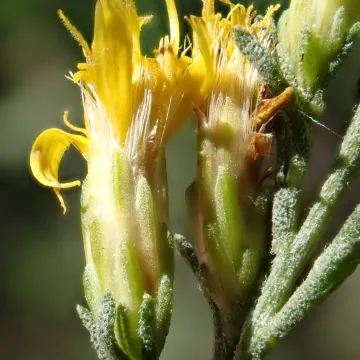
Palmer's goldenbush (lat. Ericameria palmeri) is a perennial evergreen shrub belonging to the Asteraceae family. This resilient plant is highly valued for its ability to thrive in harsh, arid environments where other vegetation struggles to survive. Botanically, it is recognized for its dense habit and characteristic golden-yellow flowers that appear during the late summer season.
The native range of this species covers the arid regions of Southern California and parts of Northern Baja California, Mexico. It typically grows in chaparral and coastal sage scrub habitats. The plant has evolved to handle extreme heat and long-term water scarcity, making it a staple of the desert and semi-desert flora within its distribution area.
From a botanical standpoint, Ericameria palmeri features narrow leaves that are often resinous, serving as a defense mechanism against water loss. Its root system is extensive, allowing it to tap into deep soil moisture. The plant usually reaches a height of one to two meters, forming a compact, shrubby canopy that provides essential cover for local desert wildlife.
Cultivation requirements for this species are centered around well-drained, sandy or gravelly soils. In terms of agronomy, it is considered a low-maintenance plant that thrives without fertilizers or intensive watering regimens once established. It is highly susceptible to root rot if planted in poorly drained soil, which is the primary factor to consider when introducing it to a garden or landscape project.
The main uses for Palmer's goldenbush include erosion control on steep slopes and xeriscaping, which minimizes the need for irrigation. Due to its resinous nature, researchers have explored its potential as a source of secondary metabolites. In modern agro-ecology, it is promoted as a sustainable plant for restoration projects, given its immunity to many common horticultural pests and its ability to withstand intense UV exposure.
- Exceptional tolerance to drought and heat stress.
- Low maintenance costs for landscape architects.
- Valuable nectar source for native pollinators in autumn.
- Natural erosion control for fragile soil structures.
Photo gallery