Ericameria parishii
Ericameria parishii
Description
Ericameria parishii, commonly known as Parish's goldenbush, is a perennial evergreen shrub belonging to the family Asteraceae. In agricultural and horticultural contexts, it is recognized for its exceptional resilience to harsh environments and its suitability for water-wise gardening and ecological restoration projects.
Native to the southwestern United States and northwestern Mexico, this species is primarily found in the chaparral ecosystems of Southern California. It has evolved to thrive in rocky, well-draining soils and is naturally adapted to the Mediterranean climate characterized by long, dry summers and mild winters.
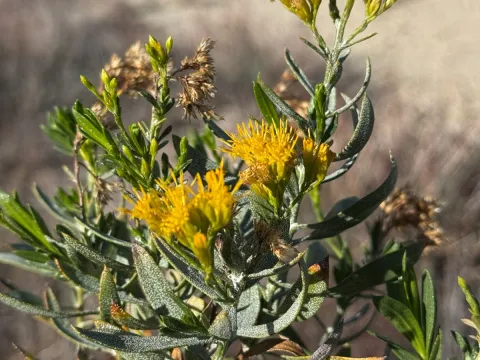
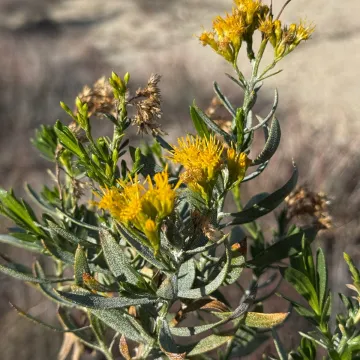
Botanically, the plant is a woody, upright shrub reaching heights of 1 to 3 meters. Its leaves are narrow and leathery, often coated in a sticky resinous substance that serves as a protective barrier against moisture loss and herbivory. During late summer and autumn, the shrub produces an abundance of small, golden-yellow flower clusters, which stand out against the grey-green foliage.
Agricultural and horticultural requirements are relatively straightforward, focusing on low-maintenance standards. The plant thrives in full sun and requires loose, well-drained soil; clay or soil prone to waterlogging must be avoided at all costs. Irrigation is rarely necessary once the root system is established, making it an ideal candidate for low-input agricultural systems.
Beyond its aesthetic use in xeriscaping, Ericameria parishii serves as a crucial late-season nectar source for pollinators. While the plant is generally robust, growers should monitor for potential fungal pathogens during unseasonably wet periods. Pests are usually limited to minor infestations of aphids or mites, which rarely threaten the structural integrity of a healthy, mature shrub.
Photo gallery