
Description
Alpine eyebright (Euphrasia alpina) is a herbaceous semi-parasitic plant belonging to the Orobanchaceae family. Unlike conventional crops, it relies on haustoria to extract water and essential minerals from the root systems of neighboring host plants, primarily grasses, which allows it to thrive in nutrient-poor high-altitude environments.
The native habitat of Euphrasia alpina is restricted to the mountain ranges of Europe, most notably the Alps and the Pyrenees. It is typically found in alpine meadows and rocky slopes where the soil is well-drained and the vegetation cover is relatively sparse, allowing the plant sufficient access to light and suitable hosts.
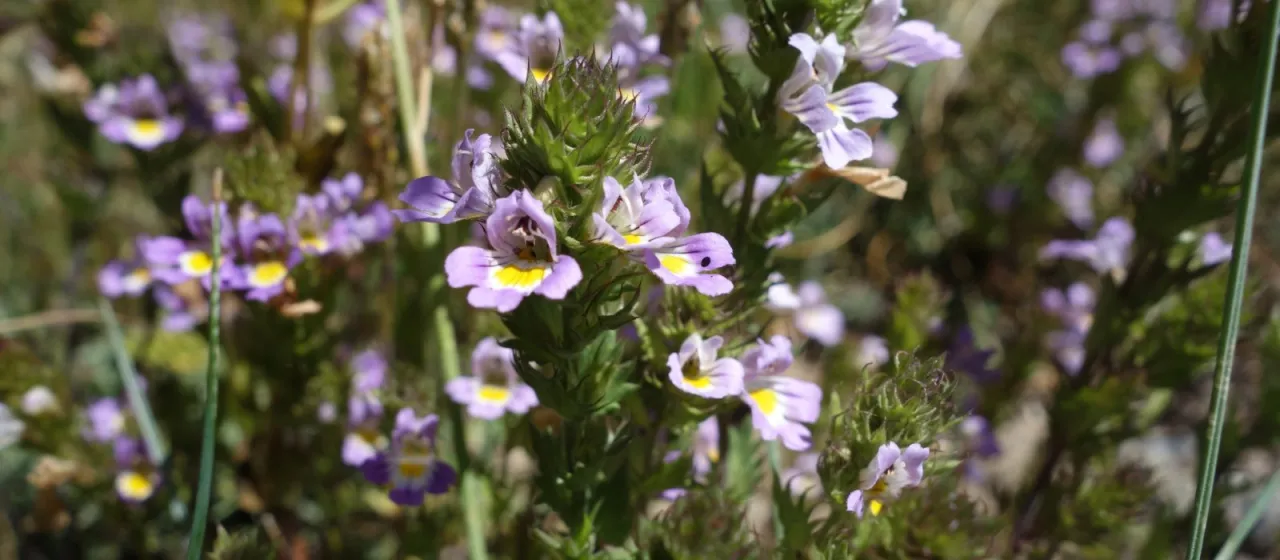
Botanically, the plant is characterized by a compact structure with small, opposite, toothed leaves. Its flowers exhibit a unique morphology, often appearing white to pale violet, which serves to attract specific pollinators common to high elevations. The reproductive cycle is highly dependent on the short alpine growing season, and seed germination often requires specific temperature stratification.
Environmental requirements for this species are strict, as it is highly sensitive to soil composition and water management. It prefers calcareous soils with excellent drainage, as the roots are prone to rot if stagnant water occurs. Because it is a semi-parasite, it cannot be cultivated in isolation in traditional fields, requiring a complex co-existence with host flora to maintain vitality.
Historically, the species has been harvested for its traditional applications in ophthalmology and skincare, valued for its bioactive compounds such as iridoid glycosides and tannins. While not a commercial crop in the sense of large-scale agriculture, it remains a subject of botanical interest. Major concerns for its survival include climatic changes affecting alpine meadows and the potential loss of host plant diversity due to overgrazing or land-use modifications.