
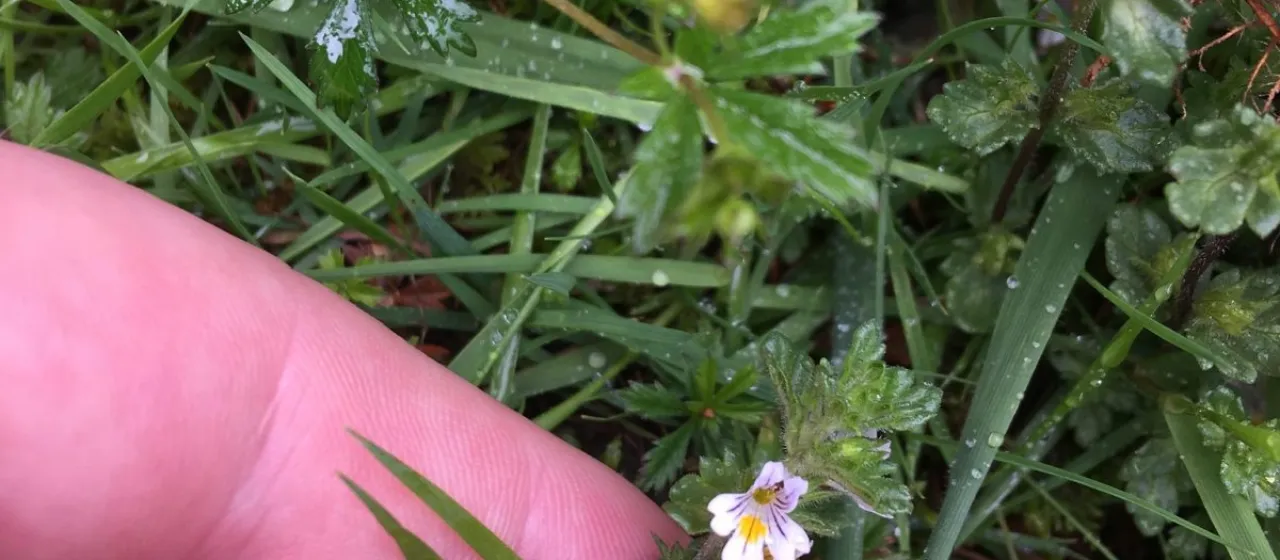
Description
English eyebright (Euphrasia anglica) is an annual herbaceous plant belonging to the Orobanchaceae family. Unlike traditional agricultural crops, this species is primarily known for its historical and contemporary use in herbal medicine, particularly for supporting ocular health due to its chemical composition.
The plant is classified as a hemiparasite. While it contains chlorophyll and performs photosynthesis, it relies on haustoria to extract nutrients and water from the roots of various grasses. This reliance makes the presence of host plants essential for its survival, which is a critical factor for any potential conservation or cultivation efforts.
Botanically, Euphrasia anglica is characterized by its small size and distinctively toothed leaves. The inflorescence consists of small, zygomorphic flowers that vary in color from white to pale purple, often featuring a yellow blotch. These features are specifically adapted to attract local pollinators during the mid-summer peak of the growing season.
Regarding growing requirements, the species favors damp grasslands, pastures, and open meadows. It is highly sensitive to soil compaction and nitrogen-rich environments, which can lead to excessive growth of competitors and shade out the eyebright. Successful establishment in a controlled environment requires the simultaneous seeding of suitable grass hosts.
The main commercial and practical use is the harvesting of the aerial parts of the plant, which are dried for use in teas and tinctures. It is widely recognized for anti-inflammatory and antiseptic properties.
- Commonly used in traditional herbal infusions.
- Known for its inclusion in modern botanical eye-care supplements.
- Requires careful management to prevent over-harvesting from wild populations.