
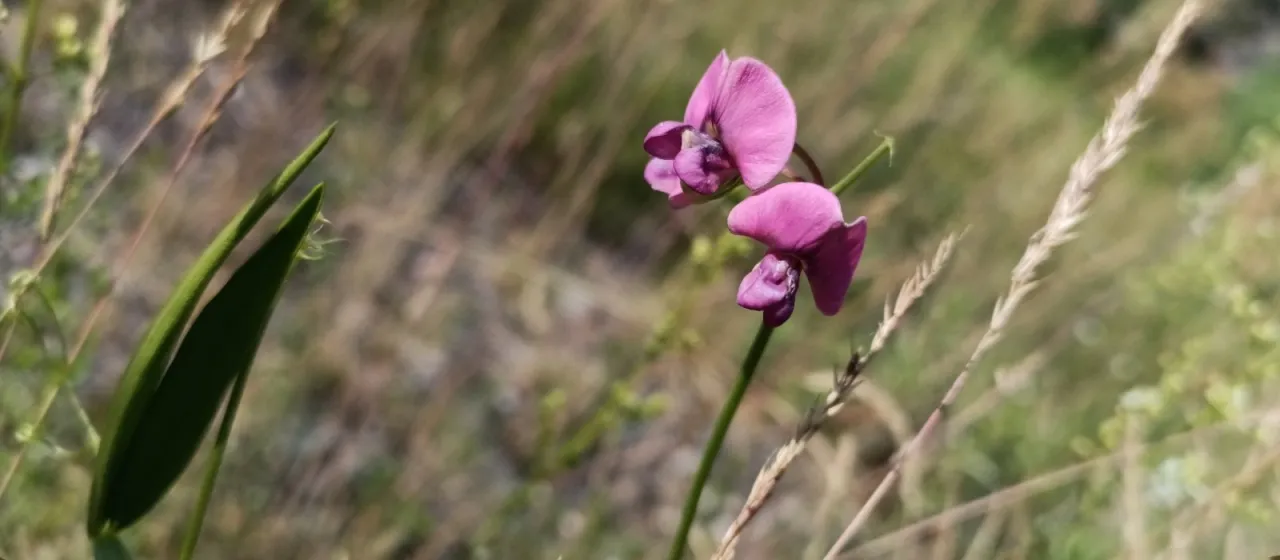
Description
Narrow-leaved everlasting pea (Lathyrus sylvestris L.) is a robust perennial herb belonging to the Fabaceae family. It is a long-lived plant known for its vigorous growth, deep root system, and ability to persist in challenging environments, making it a valuable candidate for sustainable forage production systems.
Native to Europe and parts of Western Asia, this plant naturally thrives in woodland edges and clearings. In agricultural contexts, it has been introduced to various regions as a forage crop due to its ability to fix atmospheric nitrogen and its excellent tolerance to drought, which helps maintain productivity during dry summer months.
The plant features long, climbing, winged stems that can reach up to two meters, supported by tendrils. Its leaves are composed of narrow leaflets, and the flowers appear in bright pink to reddish-purple clusters during the summer. This complex root structure makes it an effective soil binder and a hardy competitor against weeds once established.
In terms of climatic and soil requirements, Lathyrus sylvestris is remarkably adaptable. It performs best in well-drained loamy soils but can tolerate various soil types, including those with lower fertility. It is highly winter-hardy, surviving freezing temperatures easily. Although it grows slowly during the first year of establishment, it becomes a prolific producer in subsequent years.
Its primary agricultural use is as a protein-rich forage crop for livestock. It can be harvested for hay or used for grazing, though management is key to maintaining stand longevity. Key management practices include:
- Ensuring a weed-free seedbed during the initial sowing phase.
- Controlling grazing or cutting frequency to avoid depleting root reserves.
- Applying phosphorus-based fertilizers to promote vigorous nodule development.
Common issues include fungal pathogens such as rusts and various leaf spots, especially in high-humidity environments. Pest pressures, such as aphids or seed weevils, may arise, but healthy, well-managed stands generally show good resilience. By balancing proper cutting cycles with soil health maintenance, farmers can maximize the long-term yields of this dependable legume.