
Description
The Desert olive (Forestiera angustifolia) is a perennial evergreen shrub belonging to the Oleaceae (olive) family. Despite its common name, it is not a commercial olive producer, but rather a hardy, drought-tolerant ornamental shrub that plays a vital role in regional ecosystems and water-wise landscaping.
The native habitat of this species is located in the arid regions of North America, specifically spreading through Texas and northern Mexico. It is well-adapted to hot, semi-desert environments, thriving on limestone-based soils and rocky outcrops where other plant species would struggle to survive due to water scarcity.
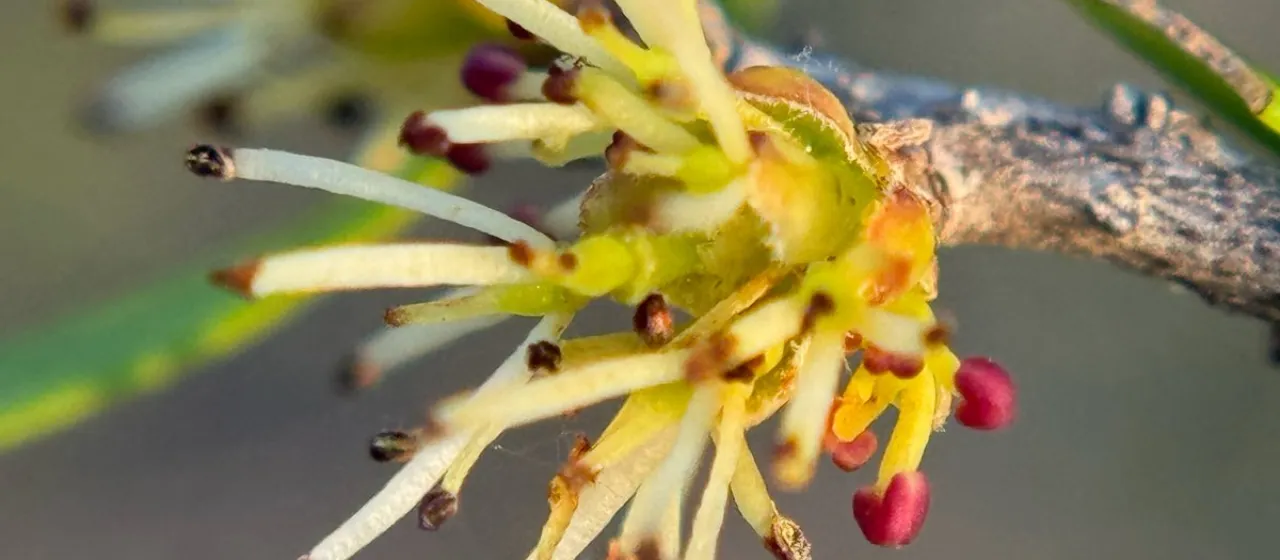
Botanically, the plant is characterized by its narrow, lanceolate, leathery leaves which are designed to minimize moisture loss. The shrub typically grows in a dense, multi-stemmed habit. During the early spring season, it produces small, inconspicuous clusters of yellow-green flowers, which eventually transform into dark, drupe-like fruits that are highly favored by local songbirds and wildlife.
Regarding agrotechnical requirements, the Desert olive prefers full sun and well-draining soil. It is remarkably tolerant of high pH levels and saline conditions, which makes it an excellent choice for difficult sites. Once established, the plant exhibits extreme drought tolerance and requires very little maintenance, though periodic pruning is recommended to maintain the desired shape and density of the shrub.
The main horticultural and landscape applications for this species include:
- Xeriscaping and water-efficient garden design.
- The establishment of robust privacy hedges and windbreaks.
- Erosion control in sloping areas with poor soil quality.
In terms of plant health, Forestiera angustifolia is known for being remarkably resistant to most common pests and diseases. The most significant threat to its vigor is poor soil drainage, which may induce root rot in overly saturated conditions. Providing adequate airflow and avoiding heavy mulching near the base of the stem helps in maintaining the plant's long-term health and vitality.