
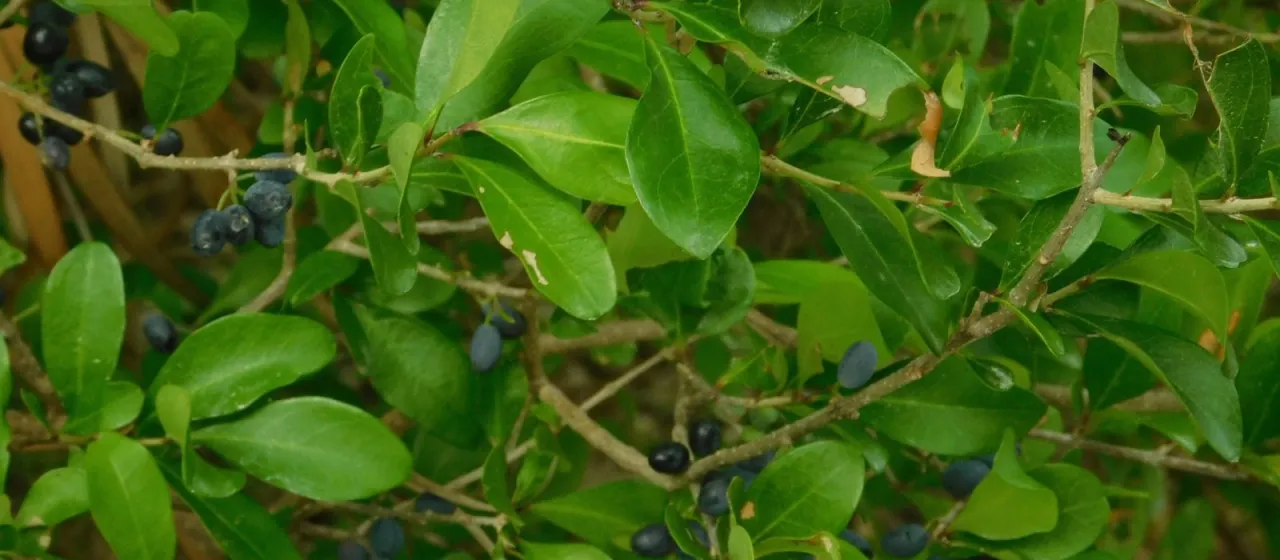
Description
Florida privet (Forestiera segregata) is a robust, evergreen shrub or small tree belonging to the Olive family (Oleaceae). Known for its dense growth habit and glossy, opposite leaves, this plant is a staple in native landscaping within its natural range. It typically grows as a multi-stemmed shrub, reaching heights that make it an excellent choice for screening or natural fencing.
The native range of this species extends across the southeastern United States, particularly Florida, and extends into the Caribbean and the Bahamas. It is naturally found in coastal scrub, maritime forests, and sandy dunes, indicating a high tolerance for varied soil types including limestone and sand. Its ability to thrive in salt-laden air makes it particularly valuable for coastal horticultural projects.
Botanically, the plant is dioecious, meaning male and female flowers occur on separate plants. The flowers are small, yellow-green, and appear in early spring, often before new leaf growth. The female plants produce small, dark blue to black drupes that serve as a crucial food source for migratory birds and local wildlife, reinforcing its importance in regional biodiversity conservation.
Regarding agronomic requirements, Florida privet is considered a low-maintenance plant once established. It thrives in full sun to partial shade and is highly drought-tolerant. While it adapts to a wide range of soil pH levels, it prefers well-drained substrates. Minimal fertilization is required, and pruning should be focused on shaping the plant or removing dead wood to maintain a dense, vigorous appearance.
The primary horticultural use of this species is in restoration ecology and sustainable landscaping. It is frequently employed as a natural buffer, a hedge, or a screen in areas where salt tolerance is required. Beyond its functional role, its year-round evergreen foliage and importance to local fauna make it a preferred choice for ecologically conscious gardeners looking to support local bird populations.
- Excellent salt spray tolerance for coastal sites.
- Significant ecological value as a wildlife food source.
- Low water requirements after establishment.
- Natural resistance to many common garden pests.