
Description
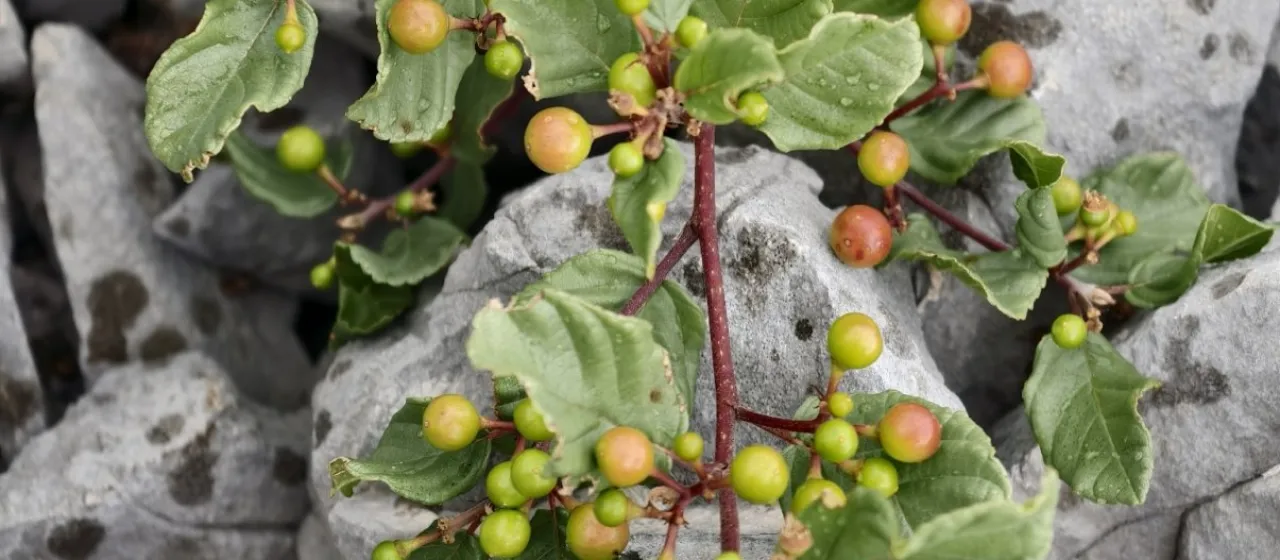
Rock buckthorn (Frangula rupestris) is a distinct shrub species belonging to the Rhamnaceae family. Unlike its taller relatives, this plant is characterized by a low-growing, often sprawling habit, specifically adapted to thrive in harsh, rocky environments where nutrient availability is limited.
Native to the regions of Southeastern Europe, particularly the Balkan Peninsula, the rock buckthorn has evolved to populate limestone slopes and exposed crags. Its natural habitat is defined by rocky soils and high solar exposure, making it an ideal candidate for specialized gardening projects in similar temperate climatic zones.
Botanically, the species is known for its leathery, elliptical leaves and compact growth pattern, which rarely exceeds 1.5 meters in height. It produces inconspicuous greenish flowers, followed by small drupes that serve as a food source for local birds. The plant's deep root system is highly effective at stabilizing soil in steep or rocky terrain.
Cultural requirements for rock buckthorn focus on drainage and light. It thrives in full sun and requires alkaline to neutral soils. In agricultural or horticultural practice, it is crucial to avoid waterlogged conditions, as the root system is susceptible to decay in heavy, saturated substrates. Maintenance is generally minimal, reflecting the plant's hardy nature.
The primary use of rock buckthorn is in ornamental landscaping, specifically for rock gardens, xeriscaping, and slope stabilization. While not a major commercial crop, it is highly valued by botanists and specialized nurseries for its resilience and unique aesthetic appeal. Common pests and diseases are rarely a concern unless the plant is improperly sited, reinforcing its reputation as a low-maintenance, reliable specimen.
- Excellent for xeriscaping
- High tolerance to alkaline soil
- Minimal maintenance required