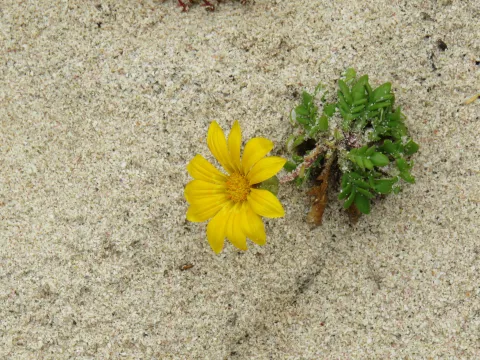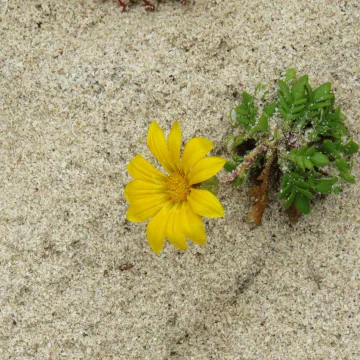

Gazania hybrid
Gazania maritima Levyns x Gazania rigens (L.) Gaertn.
Description
Gazania hybrid (Gazania maritima Levyns x Gazania rigens (L.) Gaertn.) is a popular ornamental herbaceous perennial belonging to the Asteraceae family. Known for its vibrant, daisy-like flowers and heat tolerance, this plant is a staple in modern gardening. It has been selectively bred to emphasize its drought resistance and the intense, diverse coloration of its blooms.
Originating from the coastal and sandy regions of Southern Africa, the species is perfectly adapted to intense sunlight and limited water availability. Its natural habitat has influenced its widespread use as a landscape crop in Mediterranean, temperate, and even tropical climates. It is frequently employed in xeriscaping due to its minimal water requirements once established.
Botanically, the Gazania hybrid features a basal rosette of leaves, often with a silver-white underside that helps regulate temperature and moisture loss. The flower heads are notable for their unique ability to track the sun and close during overcast weather or night. Their root systems are quite deep for a plant of this size, allowing them to tap into subsurface moisture efficiently.
Regarding agrotechnical requirements, the plant demands full sun exposure and well-draining, sandy or loamy soil. Heavy, waterlogged soils are detrimental to the plant, often leading to root decay. Maintenance is relatively simple, requiring only occasional deadheading of faded flowers to encourage new growth and a balanced approach to irrigation, ensuring the soil dries out between watering intervals.
In terms of agricultural and landscape utilization, Gazanias are used for ground cover, rock gardens, and container planting. Common pests include aphids and spider mites, which can be managed with standard horticultural oils or soap sprays. Diseases, particularly botrytis and other fungal rots, are usually the result of poor ventilation or excessive humidity, making proper spacing and soil management the primary methods for disease control.
Photo gallery