Globe candytuft
Iberis umbellata L.
Description
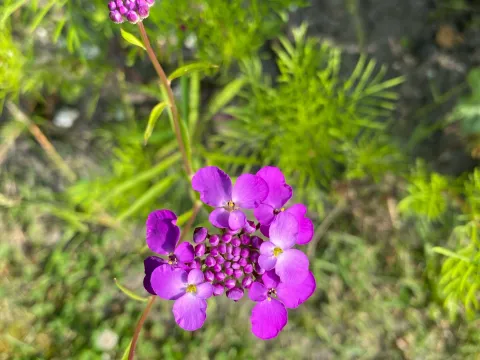
Globe candytuft (Iberis umbellata L.) is a decorative annual herbaceous plant belonging to the Brassicaceae family. Highly valued by gardeners for its dense, umbrella-shaped clusters of vibrant flowers, this species serves as a staple in flower beds, rock gardens, and borders. Its rapid growth and visual appeal make it a preferred choice for seasonal landscaping projects.
Native to Southern Europe and the Mediterranean basin, the plant has historically adapted to stony and well-drained habitats. Its successful expansion into various global regions is due to its natural resilience and ease of cultivation. In temperate zones, it is typically grown as a cool-season annual that thrives in the spring and early summer.
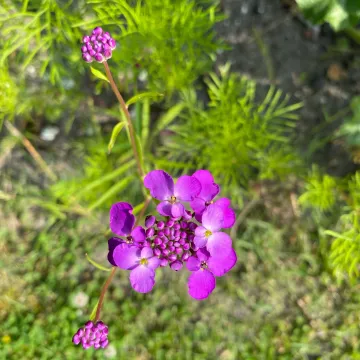
The plant features branched stems reaching up to 40 cm in height, adorned with lanceolate foliage. Its botanical uniqueness lies in the flat-topped inflorescences that produce a mass display of four-petaled flowers. Depending on the cultivar, these can range from white and lavender to deep shades of magenta and purple, providing significant decorative value to any planting scheme.
Cultivation requirements for globe candytuft center on full sun exposure and excellent soil drainage. It performs best in neutral to slightly alkaline, sandy-loam soils. While the plant possesses moderate drought tolerance once established, consistent moisture during the initial growth phase is essential for optimal development. Avoid heavy, water-logged soils to prevent root issues.
From an agronomical standpoint, planting involves direct seeding into the field or garden as soon as the soil can be worked in early spring. Maintenance tasks include thinning to ensure adequate airflow, which is critical for disease management. Regular deadheading helps to keep the plants tidy and may encourage a secondary flush of blooms later in the season.
- Direct sowing at shallow depths (approx. 0.5–1 cm).
- Thinning seedlings to 15–20 cm spacing.
- Controlled watering during early stages of development.
Pest management primarily focuses on crucifer flea beetles, which can cause significant foliar damage to young plants. Diseases such as clubroot or fungal wilt are generally associated with improper soil drainage or lack of crop rotation. To maintain plant health, it is advised to monitor the foliage frequently and employ integrated pest management (IPM) practices, avoiding excessive chemical use whenever possible.
Photo gallery