Fleshy candytuft
Iberis carnosa Willd.
Description
Fleshy candytuft (lat. Iberis carnosa) is a perennial herbaceous plant belonging to the Brassicaceae family. In agricultural and horticultural contexts, it is recognized as a hardy, low-growing species specifically adapted to alpine and sub-alpine ecological niches, often utilized for ornamental rock garden landscapes.
The plant originates from the mountainous regions of Central and Southern Europe, particularly the Alps and Pyrenees. Its native habitat consists of limestone screes and rocky crevices, which dictates its preference for well-aerated environments with low organic matter content, simulating its wild, high-altitude growing conditions.
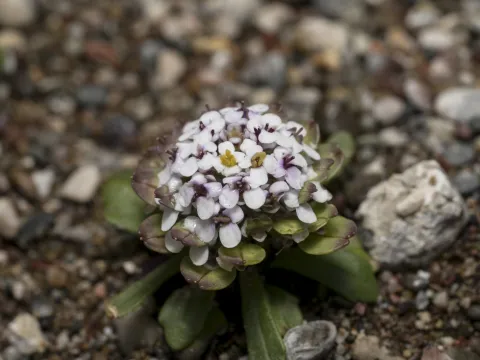
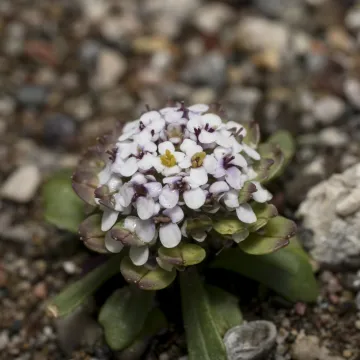
Botanically, this species is characterized by its succulent, fleshy foliage that aids in moisture retention and its cushion-forming growth habit. The plant typically reaches a modest height of 15–20 cm, producing dense, corymbose clusters of flowers that exhibit white to pale pink hues during the late spring flowering period.
The agronomy of Iberis carnosa is centered on providing optimal drainage. It thrives in alkaline or neutral, gritty, or rocky soils. Key cultivation practices include:
- Ensuring maximum solar exposure for compact growth.
- Implementing mineral-heavy soil mixes to prevent water stagnation.
- Minimal fertilization to avoid excessive vegetative growth and root vulnerability.
From a phytosanitary perspective, the plant is susceptible to common Brassicaceae pathogens, such as fungal root rots induced by waterlogged conditions and pests like flea beetles or aphids. Effective management involves careful site selection, ensuring impeccable soil drainage, and proactive monitoring during the early stages of the growing season.
Photo gallery