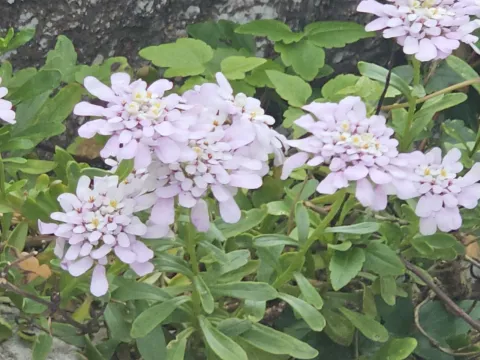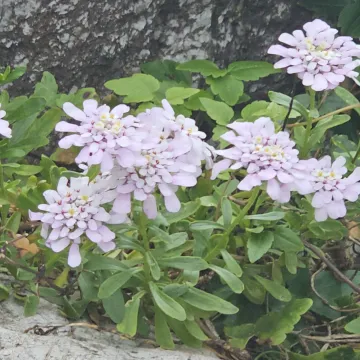

Gibraltar candytuft
Iberis gibraltarica L.
Description
Gibraltar candytuft (Iberis gibraltarica L.) is a perennial flowering plant species belonging to the Brassicaceae family. It is widely recognized in the horticultural world for its compact, bushy growth habit and its ability to produce a massive amount of flowers during the spring season, effectively covering the foliage.
The plant originates from the rocky, limestone-rich slopes of Gibraltar, which dictates its natural environmental requirements. It thrives in Mediterranean-like climates and is perfectly adapted to growing in cracks and crevices, making it an excellent candidate for specialized garden structures like rock walls and alpine beds where soil depth is limited.
From a botanical standpoint, this species is characterized by its woody base and leathery, evergreen leaves. The flowers are arranged in umbrella-shaped clusters (umbels). Each individual flower features four distinct petals. The color palette of the inflorescences is particularly varied, ranging from pure white to soft pinks and deep lilacs, providing significant visual appeal.
Cultivation requires careful attention to soil composition. Iberis gibraltarica demands excellent drainage; it cannot survive in heavy, waterlogged soils which lead to root rot. The pH preference is neutral to slightly alkaline. Minimal watering is required once the plant is established, as excessive irrigation often results in poor performance and susceptibility to pathogens.
- Full sun exposure for optimal flowering.
- Well-draining, gritty soil is mandatory.
- Deadheading spent flowers to encourage tidiness.
- Avoid heavy fertilization.
- Protection against excessive winter moisture.
The primary use for this culture is ornamental, where it serves as a staple for rock gardens, stone planters, and border edges. While generally robust, it can be affected by pests such as flea beetles and aphids. Pathogens like downy mildew or root rot are typical issues, usually triggered by poor drainage or high humidity, making site selection the most critical factor in its management.
Photo gallery