Candytuft
Iberis sempervirens x Iberis umbellata
Description
Candytuft, scientifically known as Iberis, is a popular ornamental crop belonging to the Brassicaceae family. The genus includes both perennial evergreen species, such as Iberis sempervirens, and annual species, like Iberis umbellata. The plant is highly valued for its dense, carpet-like flowering habit, which makes it a staple in rock gardens and front-border plantings.
The native range of Iberis spans the Mediterranean region, extending through Southern Europe and Western Asia. In modern cultivation, it is widely adapted to temperate climates. The plant thrives in full sun, requiring exposure to direct light to maintain its compact growth form and to ensure the most prolific flowering performance throughout the season.
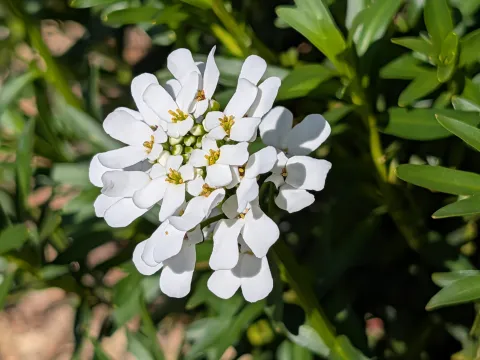
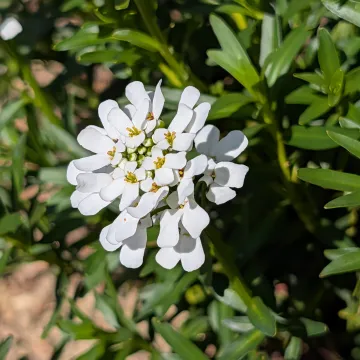
Botanically, Iberis is characterized by leathery, simple leaves and clusters of small, four-petaled flowers forming flat-topped corymbs. The color palette ranges from pure white to deep shades of violet and pink. The evergreen varieties are particularly prized for their ability to maintain green foliage throughout the winter months, providing structure to the garden landscape.
The agronomic requirements for candytuft include well-draining, slightly alkaline soil. Poor drainage is the most significant limiting factor, as the roots are highly susceptible to rot in waterlogged conditions. Maintenance involves regular weeding, light pruning after the flowering phase to encourage repeat blooms, and balanced fertilization during the active growth period.
- Sunlight: Full sun to partial shade.
- Soil type: Sandy, gritty, or loamy soil with neutral to slightly alkaline pH.
- Watering: Moderate, with drought tolerance once established.
- Pruning: Shear back by one-third after flowering to promote density.
Common health issues include fungal pathogens like clubroot and powdery mildew, which often develop due to improper aeration or excessive moisture. In terms of insect pests, flea beetles are the most prominent threat to this crop. Effective management includes keeping the surrounding area clear of weeds, ensuring adequate air circulation, and applying appropriate pest control measures when necessary.
Photo gallery