
Description
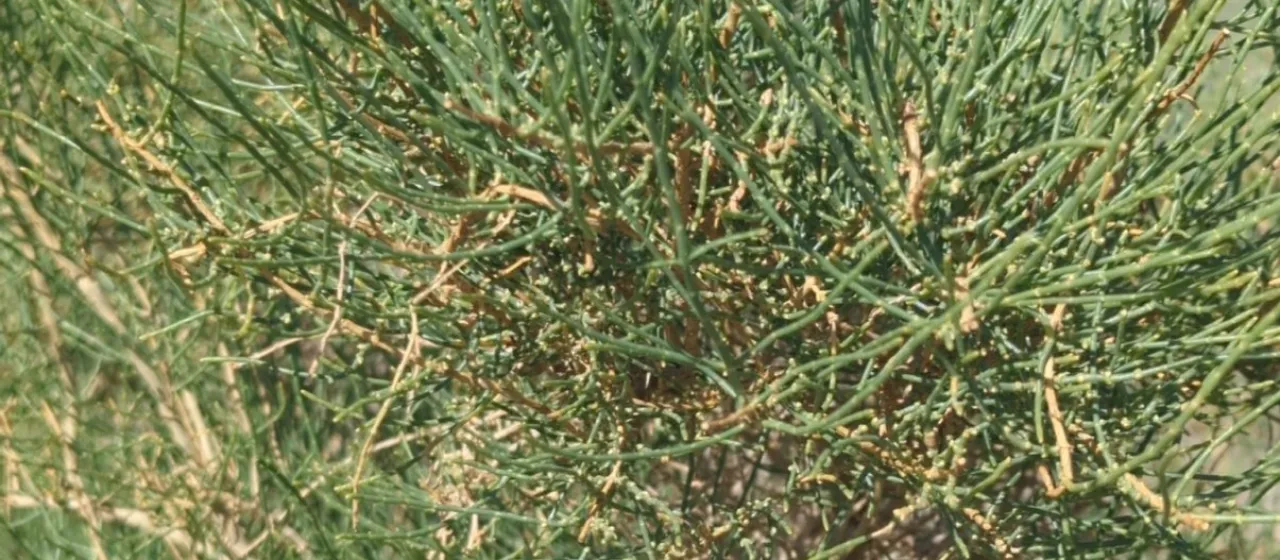
Saxaul (Haloxylon ammodendron) is a woody plant species belonging to the Amaranthaceae family. It serves as a vital agricultural and environmental resource, particularly in arid zones where few other plants can thrive. Known for its extreme resilience, it acts as a primary buffer against the desertification of fertile lands.
The plant originates from the deserts and semi-deserts of Central Asia. Its natural range extends through vast areas of Kazakhstan, Uzbekistan, and China. Cultivation of saxaul is primarily focused on afforestation projects aimed at stabilizing sand dunes, which prevents wind erosion and protects adjacent agricultural infrastructure from sand burial.
Botanically, saxaul is a tree or shrub reaching heights of up to 5 meters. Its most distinct features are the reduction of leaves to small, scale-like structures and the use of green succulent stems for photosynthesis, which minimizes water loss. The root system is extensive, capable of reaching deep underground water sources, allowing the plant to survive prolonged periods of drought.
Regarding cultivation, saxaul thrives in sandy, saline soils that are inhospitable to traditional crops. It requires full exposure to sunlight and is highly adapted to extreme temperature fluctuations. The planting process usually involves direct seeding, with minimal need for intensive irrigation once the plant is established. Farmers focus on protecting young saplings from livestock grazing to ensure survival.
- Extreme drought and salinity tolerance
- Effective sand dune stabilization capabilities
- High-density, slow-burning wood
- Ability to withstand harsh arid climates
The main economic value of saxaul lies in its ecological contribution to desert reclamation. Historically, its wood has been used as a high-quality fuel due to its extreme density. Regarding pathology, the plant is relatively robust, though it can be affected by wood-boring insects and specific rust fungi. Integrated management practices focusing on site selection and preventing overgrazing are sufficient to maintain healthy stands.