
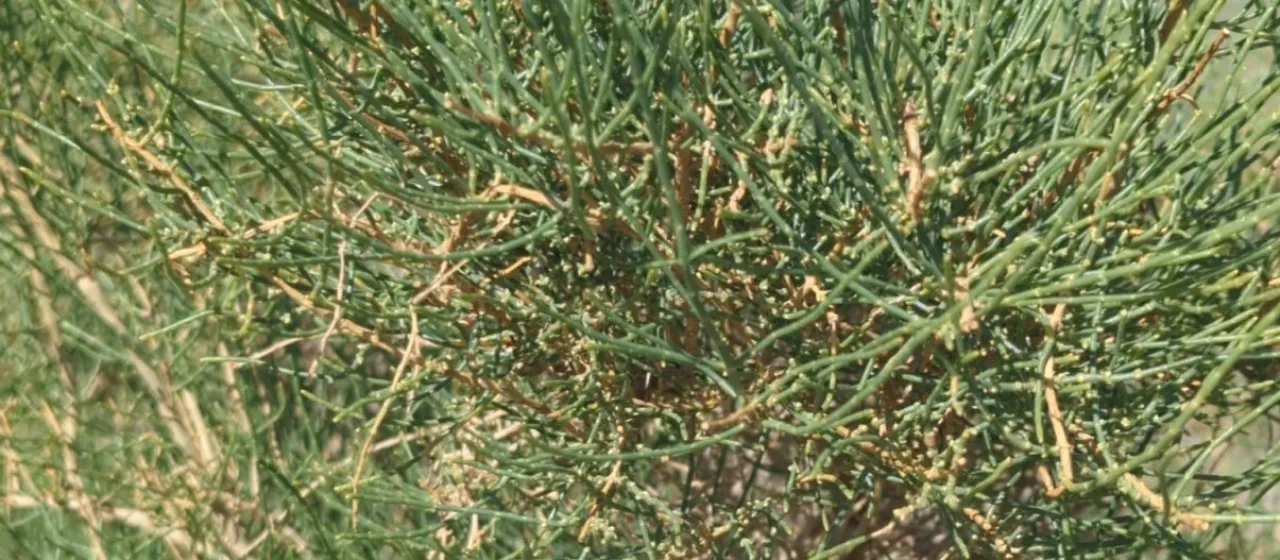
Description
Black saxaul (Haloxylon aphyllum) is a prominent woody shrub or tree belonging to the Amaranthaceae family. It is a highly specialized xerophyte, perfectly adapted to the harsh conditions of Central Asian deserts, where it acts as a foundational species for fragile arid ecosystems.
The native distribution of this species spans the vast desert regions of Central Asia, including parts of Kazakhstan, Uzbekistan, and Turkmenistan. It is typically found on sandy substrates, saline soils, and dry desert plains, demonstrating an exceptional ability to colonize environments considered unsuitable for most agricultural crops.
Botanically, the plant is characterized by its lack of true leaves, which have evolved into small scales to reduce transpiration. The primary photosynthetic activity occurs in the succulent green branches. The root system is extremely extensive and deep, reaching groundwater reserves often inaccessible to other flora in the area.
Cultivation practices focus on artificial seeding during the late autumn or winter months to leverage available soil moisture. Once established, the plants require minimal human intervention, although management is crucial to prevent overgrazing, which remains the primary threat to young plantations and natural seedling recruitment.
In terms of economic and ecological utility, Black saxaul is primarily used for sand dune stabilization and the creation of shelterbelts to protect pastures from wind erosion. While the timber has historical value as high-density fuel, current agricultural efforts are heavily prioritized towards ecological restoration and the mitigation of desertification processes.
- Excellent tolerance to highly saline soils.
- Extremely high thermal tolerance (both heat and cold).
- Crucial for biodiversity support in desert regions.
- Slow growth rate necessitates long-term land management.