
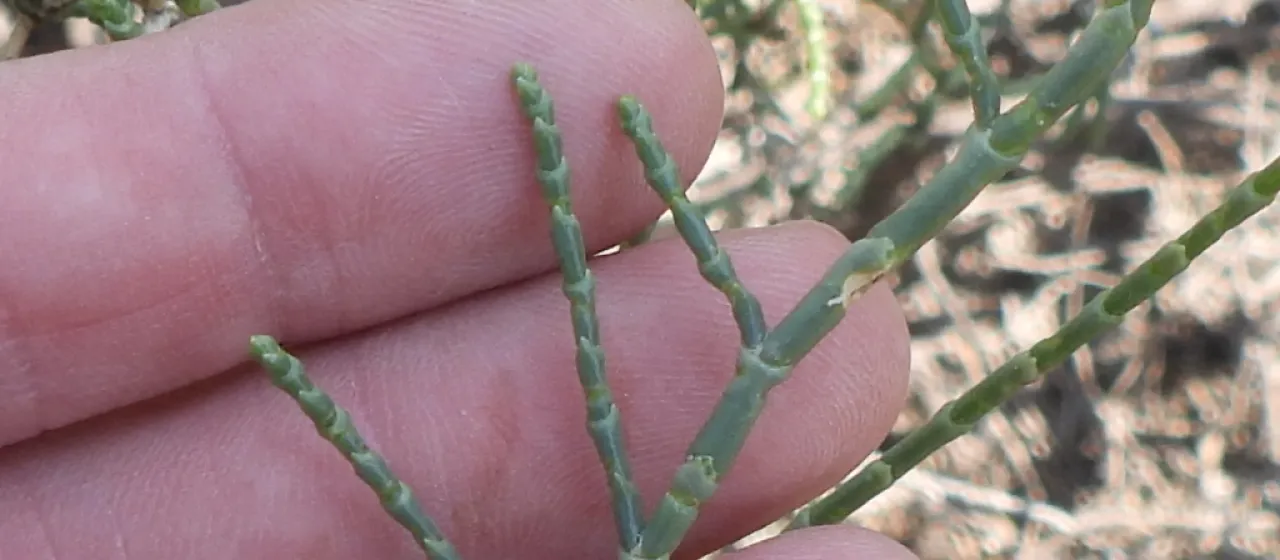
Description
Haloxylon salicornicum is a resilient perennial shrub belonging to the Amaranthaceae family. Known for its remarkable ability to thrive in extreme arid conditions, it is a dominant species in desert ecosystems, playing a critical role in stabilizing fragile landscapes and mitigating the effects of desertification in regions with high soil salinity.
Originating from the arid zones of the Middle East, the Arabian Peninsula, and parts of Central Asia, this species has adapted to extreme environments including shifting sand dunes and stony desert plateaus. Its presence is vital for maintaining the ecological balance in areas where annual rainfall is extremely scarce and temperatures fluctuate dramatically between day and night.
Botanically, the plant is characterized by its reduced leaves and green, photosynthetic branches, which minimize transpiration losses. Its deep-reaching root system not only provides access to moisture at significant depths but also anchors the soil, effectively preventing wind-driven erosion and sand dune encroachment in vulnerable agricultural and residential zones.
Regarding agrotechnical requirements, the cultivation of Haloxylon salicornicum focuses primarily on ecological restoration. It thrives in high-sunlight environments and requires well-drained, sandy, or saline soils. Artificial irrigation is generally unnecessary, as the plant is highly specialized for moisture conservation. Success depends on planting techniques that ensure seed germination during the brief wet seasons.
The primary directions for economic and ecological use include:
- Sand dune fixation and large-scale soil erosion control.
- Serving as a valuable seasonal forage source for camels and small ruminants.
- Providing high-density wood fuel for local communities.
- Contributing to the carbon sequestration efforts in arid land reforestation projects.
The plant demonstrates significant resistance to most common plant diseases and pests due to its high salt and chemical content, which discourages herbivory and bacterial infection. While certain specialized insect larvae may occasionally feed on its foliage, such cases rarely reach the threshold of economic damage, making this an ideal low-maintenance crop for harsh environments.