
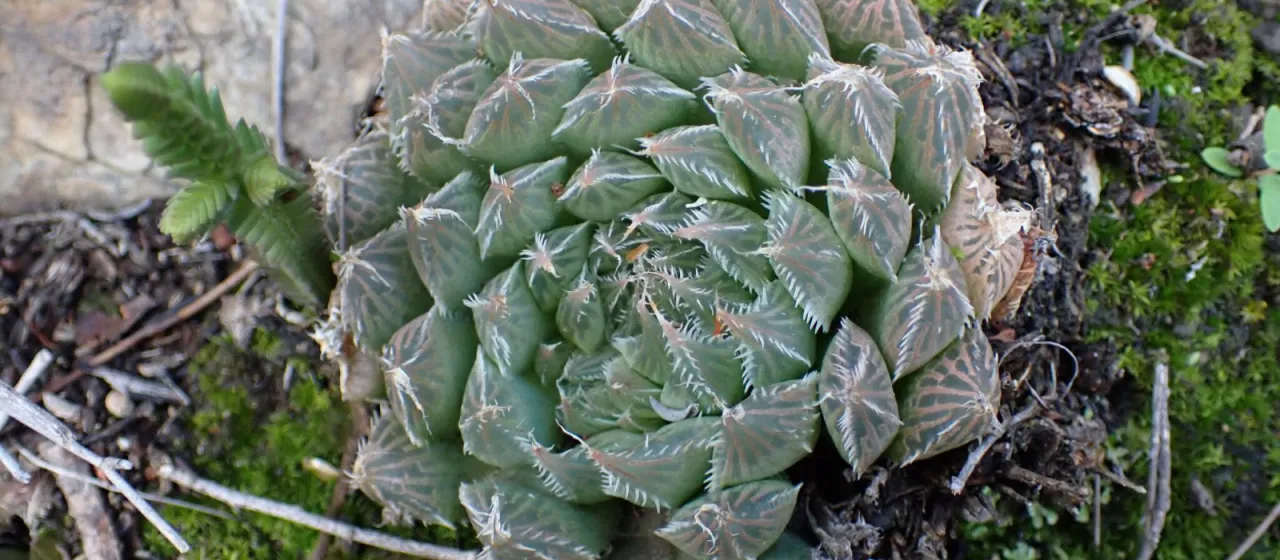
Description
Haworthia cooperi is a miniature, perennial succulent belonging to the Asphodelaceae family. Native to the Eastern Cape province of South Africa, this species has adapted to survive in harsh, rocky environments, often growing in protected crevices or semi-buried in sandy soils to minimize evaporation.
Botanically, the plant is distinguished by its translucent "windows" located at the tips of its fleshy, bead-like leaves. These structures allow sunlight to filter into the internal tissues, facilitating photosynthesis while the plant remains partially underground. The leaves form tight, star-shaped rosettes that may vary in color from pale emerald to grayish-green depending on the light exposure. During the blooming season, it produces a slender stalk topped with small, whitish, inconspicuous flowers.
Regarding cultivation requirements, Haworthia cooperi thrives in a gritty, well-draining substrate composed of pumice, coarse sand, and a small portion of organic potting mix. It prefers bright, indirect light conditions; excessive direct sunlight during midday can cause tissue damage or leaf bleaching. The plant requires a distinct dry winter dormancy period with temperatures between +10°C and +12°C to ensure healthy growth and flowering in the following season.
The primary economic use of this plant is in the ornamental horticulture industry. It is highly valued as a collectible succulent for residential and commercial indoor landscaping. Its slow growth rate and architectural aesthetic make it an ideal choice for modern miniature container gardens, terrariums, and small-space interior design projects.
Common health issues include root rot caused by poor soil drainage and water accumulation in the center of the rosette. Pests such as mealybugs and spider mites are frequent threats, especially in environments with poor air circulation or low humidity. Prevention involves maintaining a proper watering schedule and regular monitoring of leaf bases where pests typically congregate.
- Watering: Keep the soil dry between waterings, especially in winter.
- Substrate: Highly permeable, mineral-rich, cactus-specific mix.
- Propagation: Easily grown from offsets removed from the parent plant.
- Pest management: Manual removal or application of systemic insecticides.