
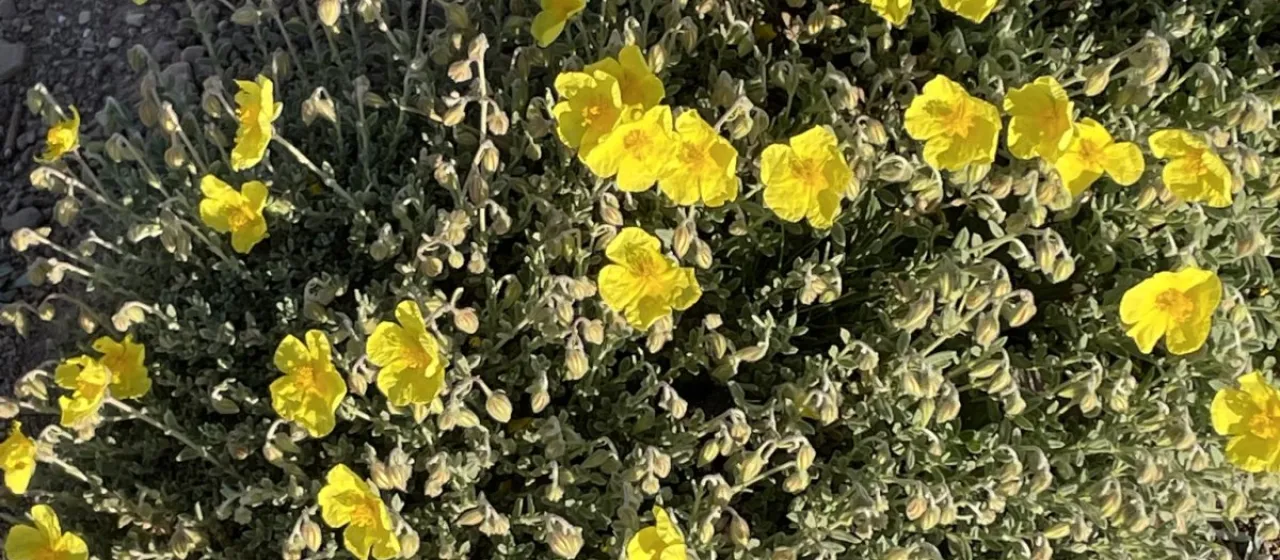
Description
The Saffron-flowered sunrose (Helianthemum croceum) is a perennial subshrub species belonging to the Cistaceae family. This plant is recognized for its preference for calcareous soils, commonly found in limestone or chalky landscapes, which makes it a unique choice for specialized rock gardens.
Native to Southern Europe and the Mediterranean, the plant is well-adapted to warm, dry climates. Its natural range reflects its resilience to poor soil quality and intense solar radiation, characteristics that have made it a popular choice in ornamental horticulture for xeric landscaping.
Botanically, it features small, ovate-lanceolate leaves with a fine pubescence and vibrant yellow or saffron-colored flowers. The growth habit is prostrate or mounded, with stems that tend to become woody near the base, allowing the plant to persist in harsh, exposed rocky environments.
The primary agronomic requirement for this sunrose is perfect drainage, as it cannot tolerate waterlogged roots. It thrives in alkaline soils and requires a full-sun exposure to promote healthy blooming. Minimal fertilization is recommended, as the plant is evolved to extract nutrients from nutrient-poor substrates.
- Requires full sun and excellent drainage.
- Thrives in alkaline and rocky soil types.
- Highly drought tolerant once established.
- Susceptible to root rot if overwatered.
In terms of usage, the Saffron-flowered sunrose is primarily utilized as a groundcover in rock gardens or as an ornamental addition to sunny borders. Typical pests include spider mites, particularly during periods of intense drought, while fungal issues occur mainly when humidity levels are excessive.