
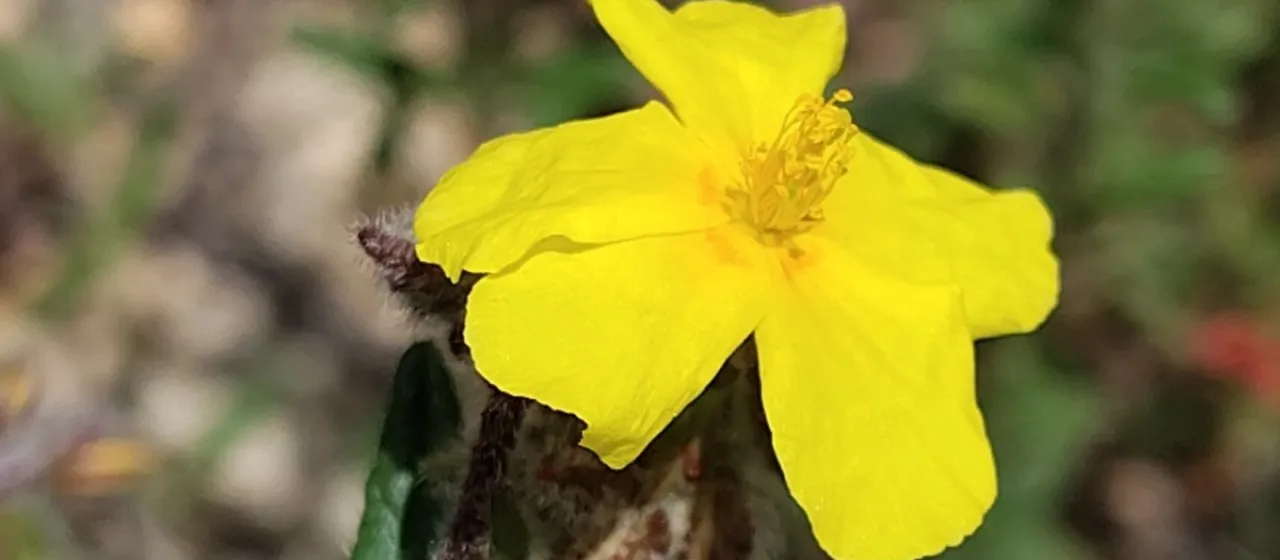
Description
Hoary rock-rose (Latin: Helianthemum hirtum) is a perennial subshrub belonging to the Cistaceae family. This resilient plant is widely recognized for its ability to thrive in harsh environments, making it a valuable addition to rock gardens, xeriscapes, and Mediterranean-style landscapes where water conservation is prioritized.
The origin of Helianthemum hirtum is traced back to the Mediterranean region and Southern Europe. It naturally occurs in limestone habitats, dry slopes, and maquis shrublands. This evolutionary history has endowed the species with exceptional tolerance to heat, intense solar radiation, and poor, rocky soils that would be unsuitable for most cultivated plants.
Botanically, the plant is characterized by its prostrate growth habit and stems covered in fine, stiff hairs, which contribute to its common name and ability to retain moisture. The foliage is typically narrow and grayish-green. The blooms are distinct with five petals, appearing in mass during the late spring and early summer, typically displaying shades of yellow.
Agrotechnical requirements for success include providing well-drained, alkaline, or limestone-based soil. The primary cause of failure in cultivation is excessive soil moisture or poor drainage, which can easily lead to root rot. Therefore, placement on mounds or slopes is highly recommended. The plant thrives best in full sun, and shading will result in sparse flowering and weakened stems.
The main usage of the hoary rock-rose is ornamental. It is favored for its low-maintenance nature once established. While generally robust, gardeners should watch for signs of fungal diseases triggered by humidity. Common pests include aphids and mites, which can be managed with standard horticultural practices. Regular pruning after flowering encourages a denser growth habit and prevents the plant from becoming woody and bare.