
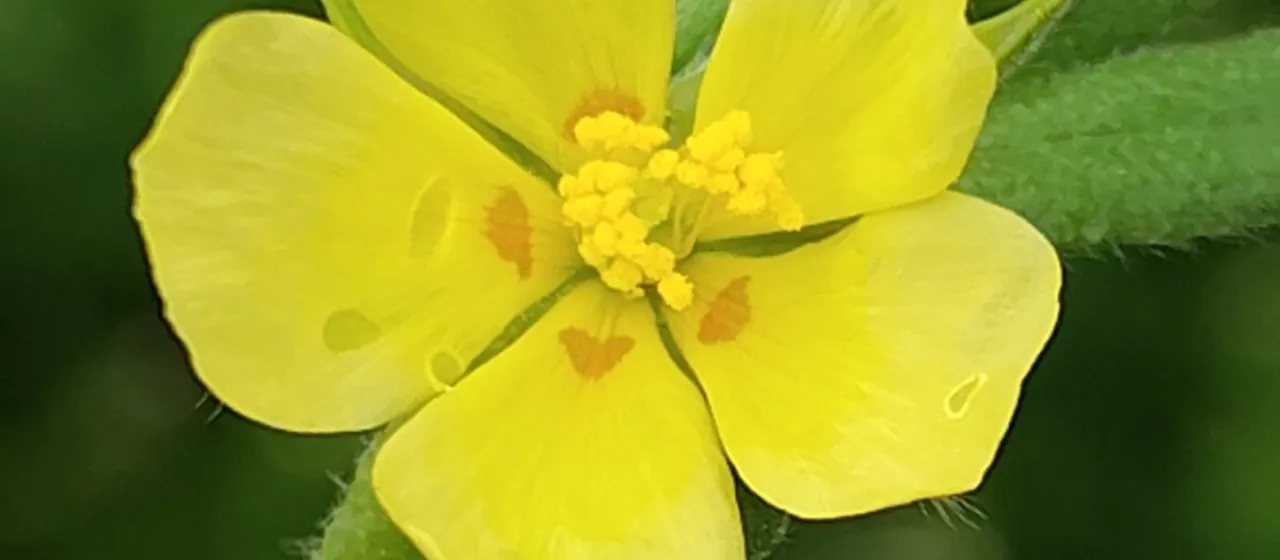
Description
Helianthemum ledifolium, commonly known as the ledum-leaved sunrose, is an annual herbaceous plant belonging to the Cistaceae family. Unlike many of its perennial counterparts within the genus, this specific species is adapted to complete its life cycle within a single growing season, making it a unique subject for study in arid-region botany.
The origin of this species is primarily Mediterranean, covering regions of Southern Europe, Northern Africa, and parts of the Middle East. It thrives in open, high-light environments and is naturally found in rocky outcrops, sandy soils, and dry grasslands. Its evolutionary history has equipped it with strong survival mechanisms against intense heat and low rainfall.
Botanically, the plant is characterized by its pubescent (hairy) leaves which bear a visual resemblance to the Ledum genus, hence its specific epithet. The flowers are typically yellow and bloom in response to direct sunlight. Its taproot system is designed to anchor the plant in loose substrates and efficiently access moisture stored deep within the soil profile during dry periods.
From an agronomic perspective, Helianthemum ledifolium requires well-drained, nutrient-poor soil. It is highly sensitive to waterlogging, which can cause crown rot. Cultivation practices should focus on minimal intervention; the plant requires no heavy fertilization and performs best in sandy or gravelly soils with an alkaline to neutral pH. Proper spacing is essential to ensure adequate airflow and prevent fungal development.
The agricultural and horticultural use of the plant is centered on xeriscaping and soil stabilization on slopes. Due to its resistance to drought, it is an excellent candidate for low-maintenance landscaping. Common pests include aphids and mites, while the primary disease threat remains root rot caused by stagnant water conditions in heavy or poorly drained soils.
- High drought and heat tolerance
- Preference for rocky and sandy soils
- Low maintenance requirements
- Excellent for erosion control on dry slopes