
Description
The willow-leaved rockrose (Helianthemum salicifolium) is an annual herbaceous plant belonging to the Cistaceae family. Known for its distinct resilience, this crop is of particular interest for agricultural systems operating in semi-arid and Mediterranean environments where moisture retention is a primary challenge.
Native to the Mediterranean Basin, the Middle East, and North Africa, this species thrives in dry, rocky terrain. It has evolved to survive in habitats characterized by sparse rainfall and intense solar radiation, making it an excellent candidate for stabilizing soil in degraded dryland ecosystems.
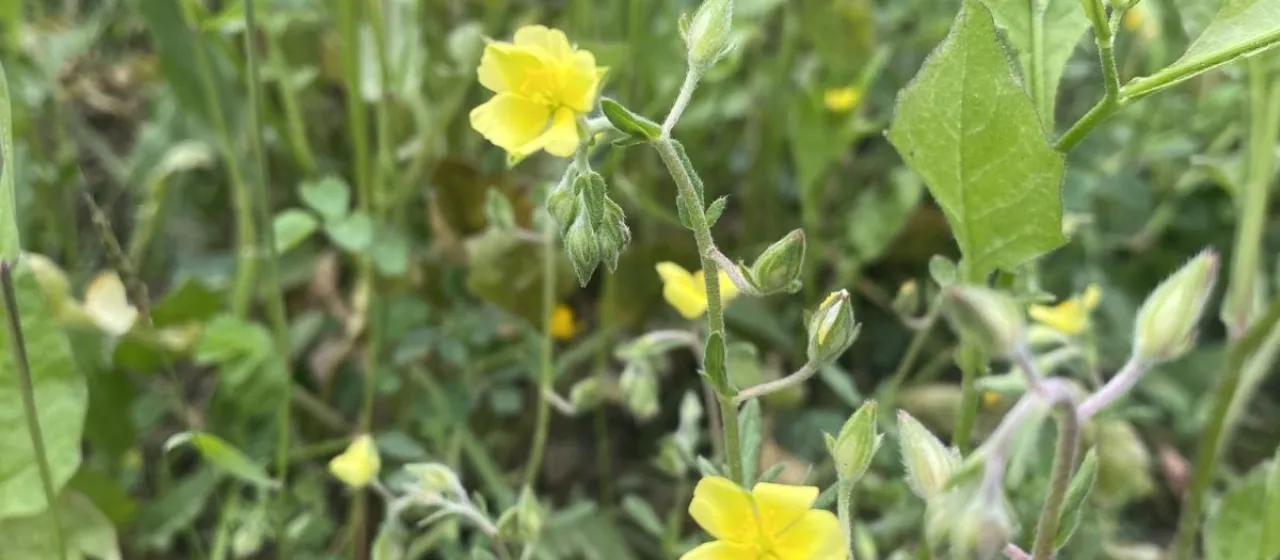
Botanically, the plant is identified by its lanceolate, willow-like leaves and yellow, five-petaled flowers that open primarily in sunny conditions. The species exhibits a robust taproot system that allows it to penetrate deep into the rocky subsoil to access mineral nutrients and moisture that remain unavailable to shallower root systems.
Agricultural management of Helianthemum salicifolium is relatively low-input. The plant requires minimal fertilization and performs best in well-drained, calcareous soils. It is highly sensitive to waterlogging; therefore, standard cultivation practices involve choosing sloped land or sandy loams that prevent root rot while ensuring adequate aeration of the soil profile.
Regarding pest and disease resistance, the species is generally hardy, though it can suffer from root pathogens if grown in stagnant water conditions. Its primary utility lies in land reclamation, erosion control on steep slopes, and its potential incorporation into drought-resistant forage mixtures in arid agricultural zones.
- Annual growth habit.
- High solar requirement.
- Excellent drainage needs.
- Adapted to alkaline soils.
- Erosion control potential.