
Description
Helianthemum squamatum, known as the scaly rockrose, is a perennial subshrub belonging to the Cistaceae family. This species is highly specialized, having evolved to thrive in the challenging, arid environments characteristic of its native habitat.
The plant is primarily native to the Mediterranean region, with a significant presence in Spain. It is particularly well-known for its ability to colonize gypsum-rich soils and rocky substrates where most standard garden plants would struggle to establish root systems.
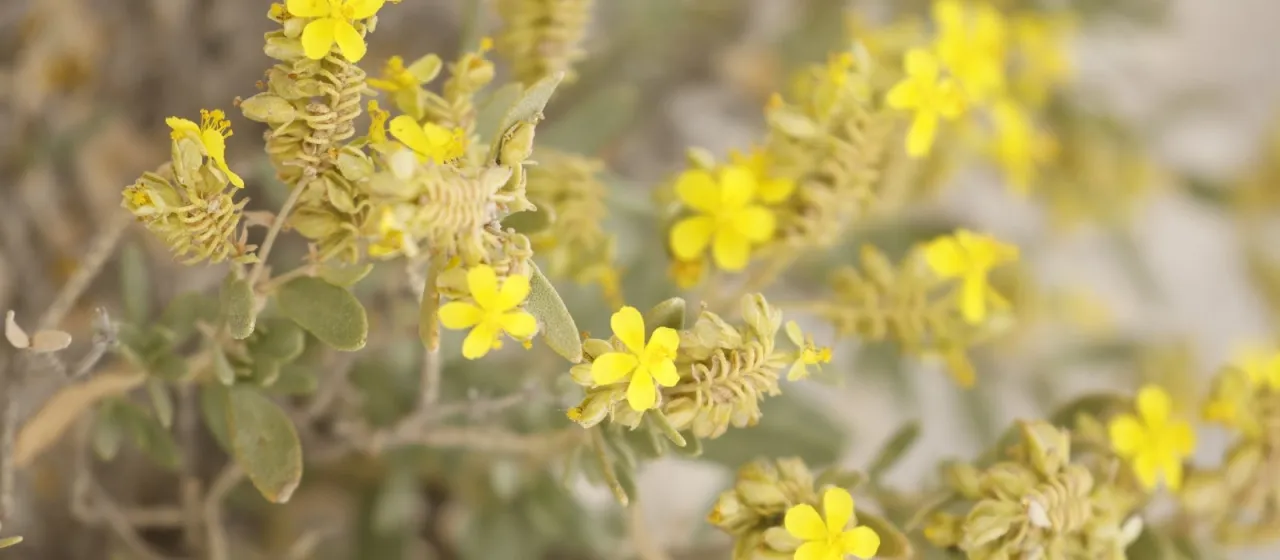
Botanically, it forms a low-growing, dense mound of foliage. The leaves are small and often have a scaly appearance, which helps reduce water loss through transpiration. During the blooming season, it produces a profusion of bright, yellow flowers that are highly attractive to local pollinators.
Cultivation of Helianthemum squamatum requires full sun exposure and extremely well-draining soil. It is essential to avoid heavy, water-retentive substrates that can lead to crown rot. Given its natural adaptation to poor, nutrient-deficient soils, it generally does not require regular fertilization.
In landscaping, this species is highly valued for xeriscaping and rock garden installations where low-maintenance, drought-resistant vegetation is required. While generally robust, the plant can be susceptible to pests such as aphids or spider mites, and its health is primarily threatened by fungal pathogens caused by high humidity or poor soil drainage.