
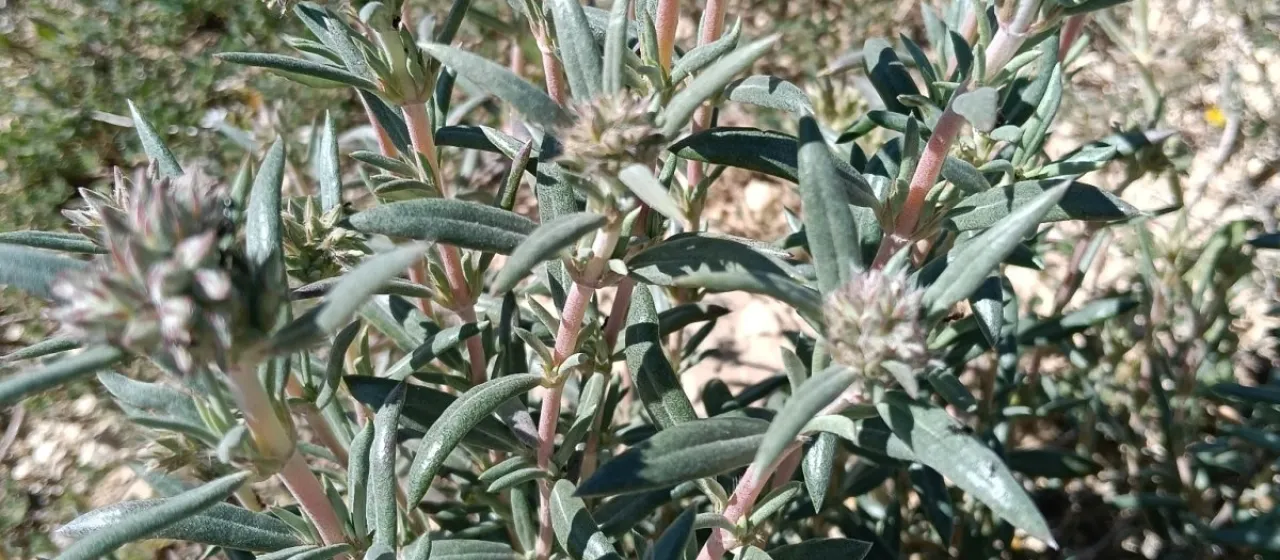
Description
Syrian rock-rose (Helianthemum syriacum) is a perennial subshrub belonging to the Cistaceae family. It is a highly resilient plant species recognized for its ability to thrive in arid and semi-arid environments, making it a subject of interest for sustainable agricultural research in dry zones.
The plant is native to the Mediterranean region and the Middle East, where it grows in limestone-rich, rocky soils. Its distribution range is characterized by hot, dry summers and mild winters. This evolutionary background has equipped the plant with superior water-use efficiency and heat tolerance.
Botanically, Helianthemum syriacum features woody stems and small, lanceolate, pubescent leaves that minimize water transpiration. Its striking yellow flowers bloom in late spring and early summer. The root system is deep and expansive, allowing the plant to stabilize slopes and survive prolonged periods of drought.
Cultivation practices require full sun exposure and well-drained soil with a neutral to alkaline pH. Over-watering is the primary cause of failure in agricultural settings, as it facilitates root decay. The plant requires minimal fertilization and thrives in soils that are too poor or dry for conventional crop rotation.
The economic value of this crop lies in its potential for extracting bioactive essential oils and its role as a valuable honey plant. Additionally, it is used in landscape restoration projects to prevent soil erosion. Common pests include spider mites and aphids, while disease management focuses primarily on preventing fungal infections caused by excessive humidity or poor air circulation.