
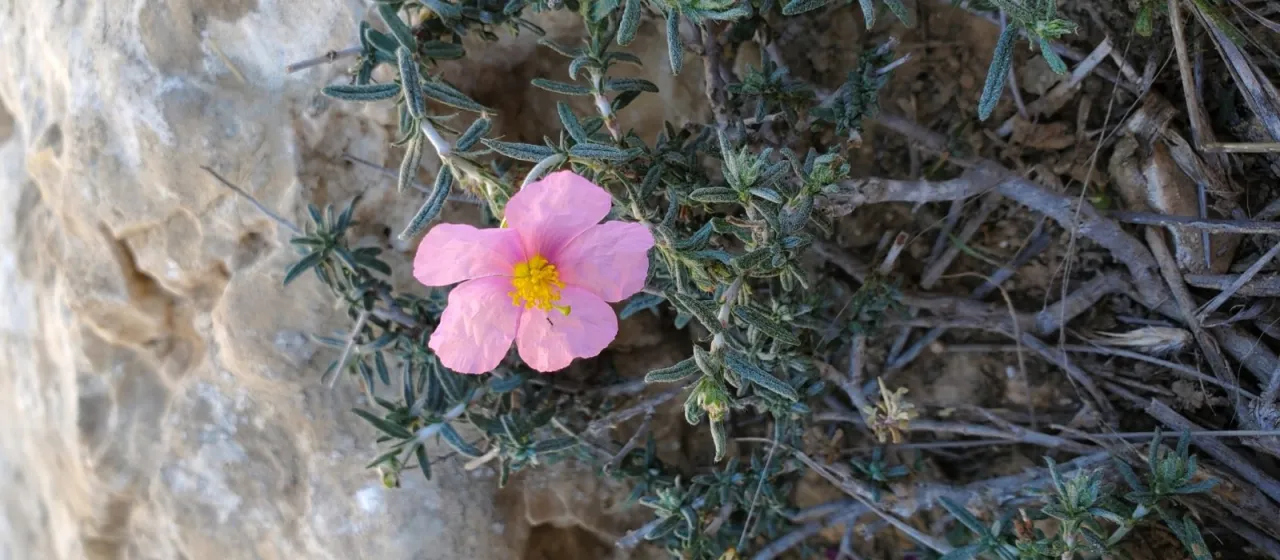
Description
Helianthemum vesicarium is a perennial flowering plant belonging to the Cistaceae family. It is recognized for its significant resilience in arid environments and its ability to thrive in poor, rocky soils where more demanding crops fail to establish themselves.
The native distribution area of this species covers the arid regions of the Middle East and Northern Africa. It is commonly found in desert environments and rocky landscapes. Evolutionarily, the plant has adapted to survive extreme temperature fluctuations and limited annual rainfall, making it a perfect candidate for xeriscaping and drought-tolerant agriculture.
From a botanical standpoint, it is a low-growing subshrub characterized by dense, spreading foliage. The leaves are typically narrow, often covered with a fine pubescence to reduce water transpiration. Its distinctive, bright yellow flowers appear in spring and summer, adding significant aesthetic value to its natural habitat.
Regarding climate and soil requirements, this plant demands full sun exposure and excellent soil drainage. It performs best in sandy or gravelly soils that do not retain excessive moisture. In terms of agricultural management, irrigation should be kept to a minimum once the plant has fully established its root system, as it is highly susceptible to root rot in waterlogged conditions.
The primary use of this crop is in ornamental horticulture, ecological restoration, and erosion control on dry slopes. While the plant is generally hardy and resilient, growers should monitor for potential issues such as fungal pathogens resulting from high humidity or poor airflow. Maintaining dry, well-ventilated conditions is the best defense against pests and diseases.