
Description
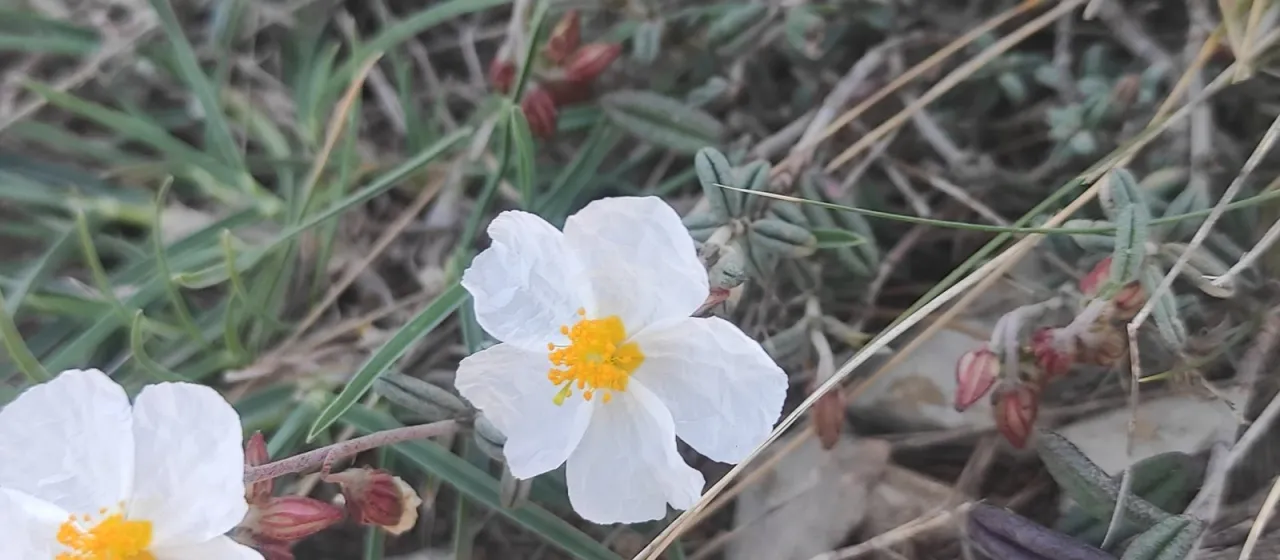
Violet sunrose (Helianthemum violaceum) is a perennial subshrub belonging to the Cistaceae family. It is a highly valued ornamental plant known for its low-growing habit and vivid floral displays, making it an excellent candidate for ground cover in sunny, exposed locations.
The plant originates from the Mediterranean basin, where it naturally inhabits dry, rocky slopes and scrublands. Due to its adaptation to harsh environments, it has become a staple in rock gardens and xeriscaping projects across many regions with temperate climates, where it thrives in full sun.
Botanically, this species is characterized by narrow, often grayish or hairy leaves and delicate violet flowers with five petals that appear in late spring and summer. The plant typically reaches a modest height, forming dense mats of evergreen or semi-evergreen foliage that remains attractive throughout the growing season.
Cultivation requirements for this species are centered on soil drainage. It prefers poor, sandy, or stony substrates with neutral to slightly alkaline pH levels. It is remarkably drought-tolerant, meaning overwatering is the most common cause of failure. Regular pruning after the flowering phase is recommended to maintain a compact, vigorous shape.
The main horticultural utility of the violet sunrose is in landscaping, particularly for erosion control on slopes and as a rock garden specimen. While it is generally robust, growers should monitor for common pests like aphids during warm spells and ensure that the root zone does not suffer from prolonged waterlogging to avoid fungal pathogens.