
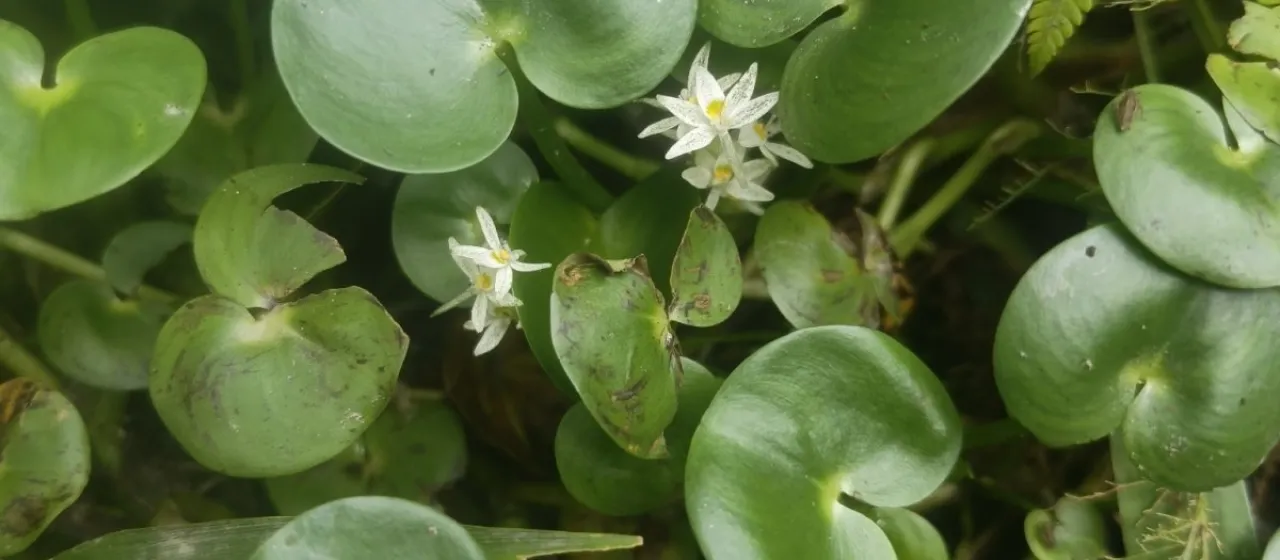
Description
Kidney-leaf mudplantain (Heteranthera reniformis) is a perennial herbaceous aquatic plant classified under the Pontederiaceae family. It is recognized for its creeping growth habit and specialized adaptation to aquatic environments, making it a popular choice for botanical collections and managed water gardens.
The species is native to tropical and subtropical regions of the Americas. Its natural range extends across various wetlands, shallow pond margins, and riverbanks. This geographical background necessitates cultivation conditions that mimic these warm, stable, and humid environments, particularly in controlled indoor settings.
Botanically, Heteranthera reniformis is defined by its creeping stems and distinct reniform (kidney-shaped) leaves attached to long petioles. The foliage is typically a vibrant green, and the plant reproduces effectively through vegetative propagation, as stems can sprout new roots at nodes, creating dense, spreading mats in suitable substrates.
To ensure healthy growth, the plant requires consistent temperatures ranging between 20°C and 28°C. High-intensity lighting is crucial for maintaining leaf color and compact growth structure. In terms of soil requirements, a nutrient-rich substrate, often supplemented with CO2 in aquascaping setups, significantly enhances development and propagation rates.
The primary utility of this plant lies in its role as a biological filter and an ornamental species for aquatic environments. By absorbing organic waste and excess nutrients directly from the water column, it plays a vital role in maintaining ecological equilibrium and improving water quality in closed systems.
- Water temperature: 22–26°C
- Light requirement: High
- Reproduction: Stem cuttings
- Environment: Paludariums, ponds, aquariums
Diseases and pests are minimal in protected environments, though the plant is susceptible to overcrowding and competitive displacement by invasive algae if lighting is poorly managed. Proper maintenance involves regular pruning to prevent the plant from dominating small aquatic spaces and to ensure adequate circulation of nutrients.