
Description
Hypecoum imberbe is an annual herbaceous plant belonging to the Papaveraceae family. In agronomic literature, it is primarily recognized as a wild plant that interacts with agricultural ecosystems. Although it is not cultivated as a primary crop, understanding its life cycle is essential for farmers managing fields in arid and Mediterranean-type climates.
Originating from the Mediterranean region and Western Asia, this plant has adapted to diverse environments, including cultivated fields and stony slopes. Its distribution is closely linked to winter cereal production areas, where the plant exploits the open niches left by primary crops. The species thrives in regions characterized by mild, wet winters and hot, dry spring seasons.
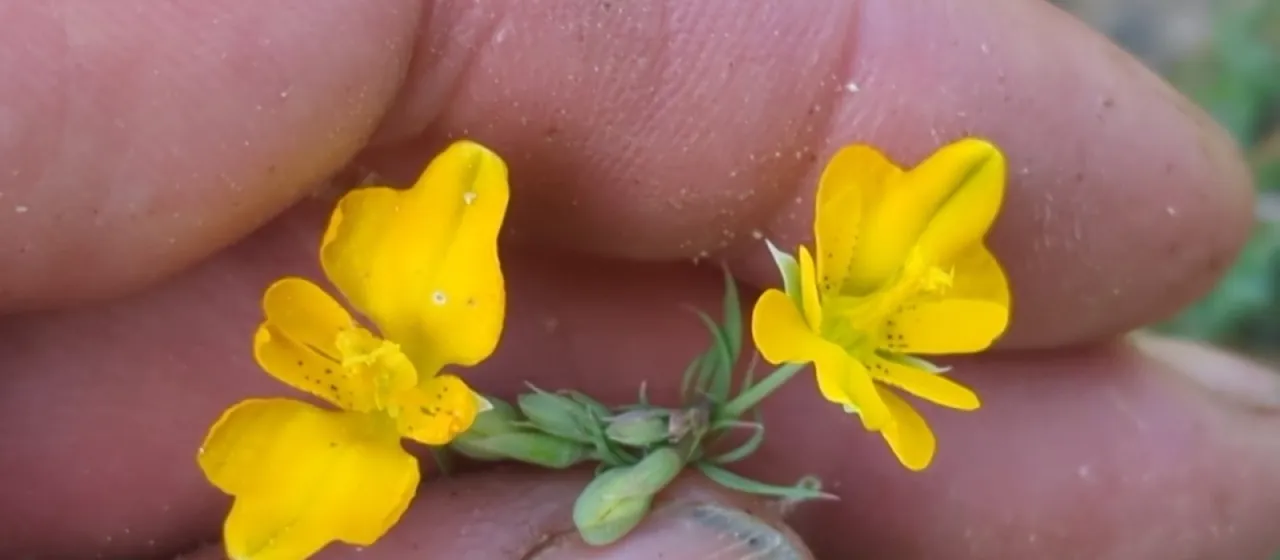
Botanically, it is distinguished by a basal rosette of finely divided, glaucous leaves and yellowish flowers. Its most significant feature is the curved, jointed fruit (silique) that breaks into segments. This mechanism of seed dispersal is highly efficient, allowing the plant to persist in the seed bank of the soil for multiple seasons, which presents challenges for crop rotation management.
Regarding agrotechnical requirements, Hypecoum imberbe favors well-drained, sandy, or loamy soils with neutral to slightly alkaline pH levels. Because of its drought tolerance, it is difficult to eradicate using standard moisture-deprivation techniques. Effective control strategies involve deep plowing to bury the seeds and the use of targeted pre-emergence herbicides during the initial stages of cereal crop development.
While the plant has no direct commercial usage, it is susceptible to various pathogens, including leaf spot fungi, and serves as a host for some common agricultural pests. Proper field sanitation, early detection, and the use of weed-free seeds are the primary methods recommended by agronomists to minimize the impact of this plant on the yield of staple crops.