
Description
Hypecoum pendulum is an annual herbaceous plant belonging to the poppy family, Papaveraceae. Known for its distinct hanging fruit structures, the plant is primarily recognized as a wild field species that thrives in open, disturbed environments, often appearing in agricultural landscapes across its natural range.
The plant is native to the Mediterranean basin, the Caucasus, and parts of Central Asia. It prefers arid or semi-arid climates, where it can complete its life cycle during the cooler, wetter months of early spring before the intense heat of summer begins. This adaptation makes it a successful colonizer of open, sunny sites.
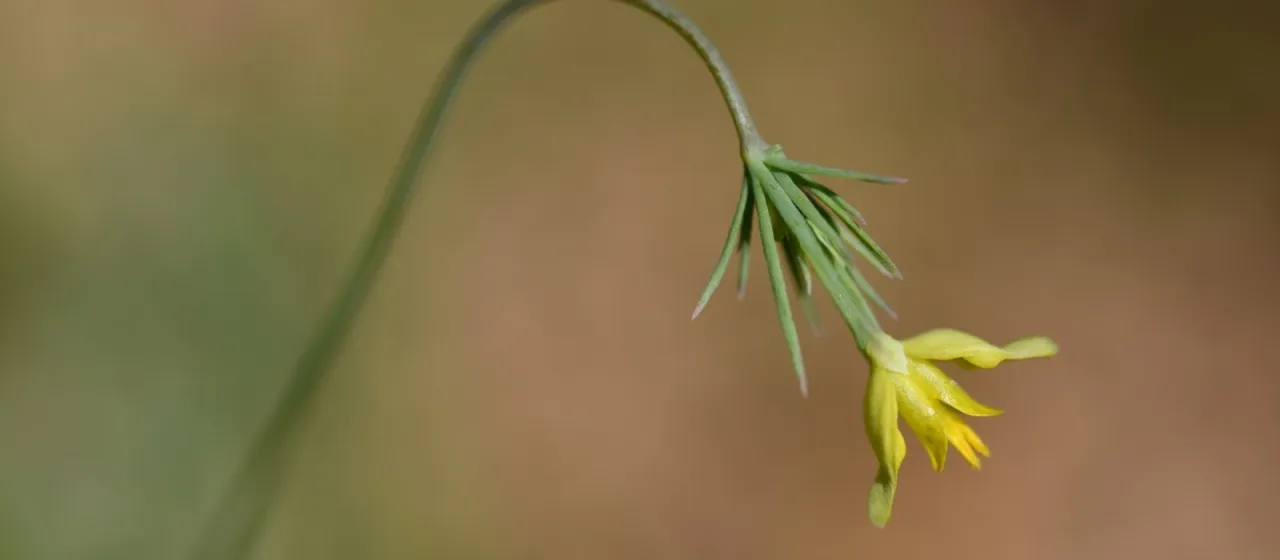
Botanically, the plant features a basal rosette of finely dissected, glaucous leaves. The stems are slender and bear small, four-petaled flowers. The diagnostic feature of the species is its pendulous, dehiscent seed capsules, which allow for efficient seed dispersal when the plant reaches maturity in late spring.
Regarding cultivation and soil requirements, Hypecoum pendulum performs best in well-drained, sandy, or rocky soils. It is highly sensitive to waterlogged conditions, which can lead to rapid root rot. The species requires full sun exposure and is generally intolerant of shade, making it a weak competitor in highly productive, dense crop systems.
From an agricultural management perspective, this plant is often treated as a weed. However, it holds interest for pharmaceutical research due to the presence of specific alkaloids. While it does not require significant fertilization, managing its spread requires careful monitoring of seed banks in the soil, as it can propagate rapidly if not controlled during the flowering stage.
- Excellent tolerance to dry and sandy conditions.
- Distinctive pendulous seed capsules for identification.
- Pharmaceutical potential due to alkaloid content.
- Requires minimal inputs in natural settings.