
Round holly
Ilex rotunda Thunb.
Description
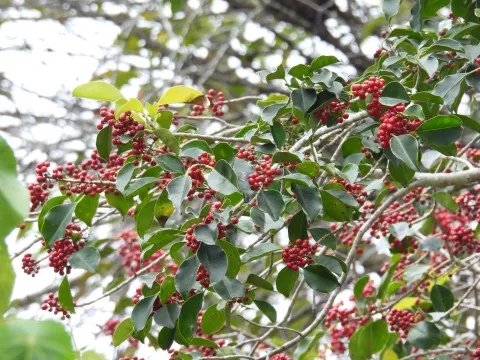
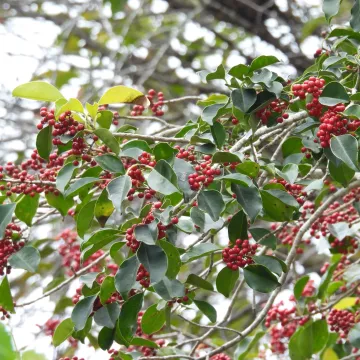
Round holly (Ilex rotunda) is an evergreen species belonging to the Aquifoliaceae family. Known for its glossy, dark green foliage and clusters of bright red berries, this plant is highly valued for its aesthetic appeal. It maintains its verdant appearance throughout the year, making it a popular choice for ornamental cultivation in appropriate climates.
The species originates from East Asia, with a natural range encompassing regions such as China, Japan, Taiwan, and Vietnam. It thrives in warm-temperate and subtropical zones, where it is often found in mountain forests and along coastal fringes. Its adaptation to these environments allows it to serve as a robust ornamental choice in similar ecological conditions globally.
Botanically, Ilex rotunda is characterized by its oval or round, leathery leaves and a dense branching habit. The tree produces small, fragrant, pale-colored flowers that develop into round, vibrant red fruits. These drupes are not only ornamental but also serve as a vital food source for local bird populations during the winter months.
Cultivation of the round holly requires well-drained, fertile soil, ideally with a slightly acidic to neutral pH. Proper moisture management is essential, as the plant does not tolerate waterlogging. While it can tolerate partial shade, it performs best with moderate exposure to sunlight. Regular maintenance includes annual pruning to encourage a dense structure and the application of fertilizers to support steady vegetative growth.
The plant is primarily utilized in landscape architecture, including the creation of hedges, privacy screens, and specimen planting in parks and private gardens.
- High tolerance for varied landscape layouts.
- Provides essential habitat for local wildlife.
- Resilience against many common shrub pests.
- Adds significant aesthetic value during winter seasons.
Photo gallery