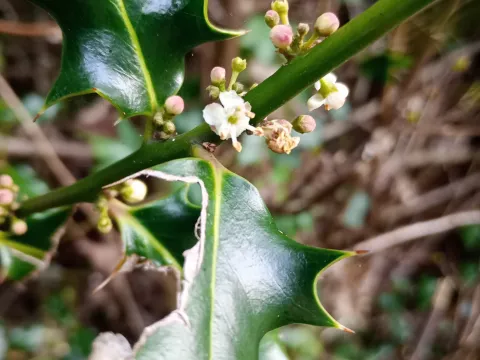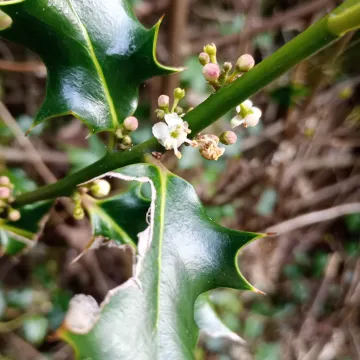

Koehne holly
Ilex x koehneana Loes.
Description
Koehne holly (Ilex x koehneana) is a distinct hybrid resulting from the crossbreeding of Ilex aquifolium and Ilex latifolia. Belonging to the Aquifoliaceae family, this evergreen shrub is highly valued for its robust growth, glossy foliage, and vibrant fruit display, making it a staple in ornamental horticulture across suitable climatic zones.
Botanically, it presents as a vigorous, upright grower that can develop into a substantial shrub or small tree. The leaves are large, leathery, and typically exhibit serrated margins with a deep green, polished finish. The plant is dioecious, and when both male and female specimens are present or a self-fertile variety is chosen, it produces abundant, eye-catching red berries that persist throughout the winter months.
Cultivation requirements involve planting in well-drained, fertile soil with a slightly acidic to neutral pH level. Koehne holly thrives in partial shade but can tolerate full sun provided that soil moisture is consistently managed. It is moderately hardy, although in colder regions, young plants benefit significantly from protective mulching and shelter against harsh winter winds.
Maintenance practices include regular watering during dry spells and annual fertilization with a balanced, slow-release formula in early spring. The plant exhibits excellent tolerance for pruning, which allows for the creation of formal hedges, screens, or artistic topiary shapes. A clean pruning technique helps maintain plant vigor and enhances the density of the foliage.
Beyond its landscape utility, the Koehne holly serves as a vital component for winter wildlife, providing food and shelter for birds. While generally resilient, the plant may occasionally face challenges from scale insects or aphids. Diseases such as leaf spot or root rot are usually associated with poor drainage, making soil preparation and site selection critical steps in its successful management.
Photo gallery