Metrosideros robusta
Metrosideros robusta A. Cunn.
Description
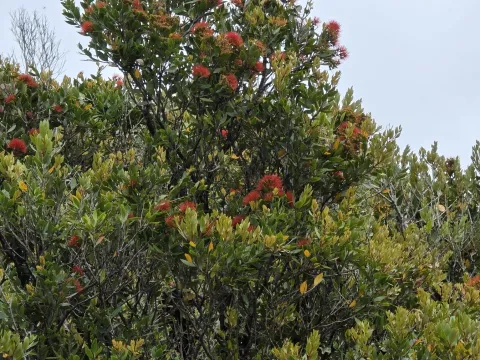
Metrosideros robusta, commonly known as the Northern Rata, is a large evergreen tree belonging to the Myrtaceae family. It is native to New Zealand and is famous for its unique hemi-epiphytic life cycle, where it often begins as a seedling in the canopy of a host tree before sending down roots that eventually envelop the host, leading to its distinctive form.
The natural distribution of this species covers the North Island and the northern parts of the South Island of New Zealand. It thrives in humid, temperate forests, ranging from coastal areas to mountain ranges. Its ability to colonize different substrates, from forest floors to the mossy branches of ancient trees, demonstrates the remarkable plasticity of this species in various ecological niches.
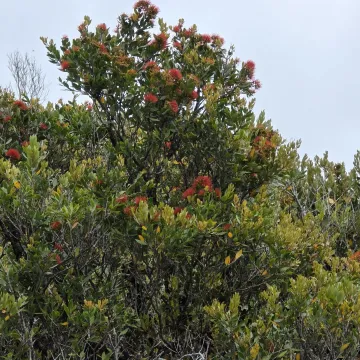
Botanically, the tree is characterized by its glossy, thick, leathery leaves and spectacular summer flowering. The flowers are bright red, featuring long, prominent stamens that provide a vital nectar source for native birds such as the tui and bellbird. The bark is rough and rugged, providing a textured appearance that adds to its ornamental value.
Cultivation requires a climate with high humidity and mild winters, as the tree is sensitive to heavy frost. Soil requirements include well-draining, nutrient-rich substrates, preferably with a slightly acidic pH. In agricultural practice, maintaining soil moisture is crucial during the establishment phase, and the use of organic mulch helps replicate the forest floor conditions native to the tree.
- Requires protection from strong, cold winds.
- Prefers high atmospheric humidity for optimal growth.
- Sensitive to waterlogged soil conditions.
- Subject to browsing by invasive pests like brushtail possums.
Beyond its ecological importance, the wood of Metrosideros robusta is known for its extreme hardness and durability, historically used for specialized timber needs. However, modern focus is primarily on conservation and its use in restoration landscaping. The main health concerns include fungal pathogens and damage caused by introduced mammals, necessitating proactive pest management in sensitive areas.
Photo gallery