Rata Tree
Metrosideros perforata (J.R. et G. Forst.) A. Rich.
Description
The Rata Tree (Metrosideros perforata) is a robust evergreen climbing shrub belonging to the Myrtaceae family. Unlike its larger tree-sized relatives, this species typically adopts a scrambling or vine-like habit, using its adventitious roots to securely attach itself to tree trunks, rock faces, or architectural structures.
Originating from New Zealand, this plant is naturally distributed across both the North and South Islands. It thrives in diverse habitats, ranging from dense temperate rainforests to more exposed coastal cliffs, demonstrating a significant degree of ecological adaptability to varying light and humidity levels.
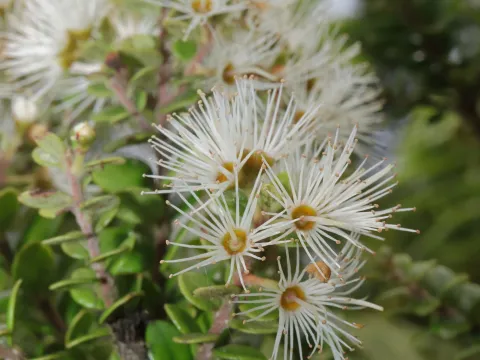
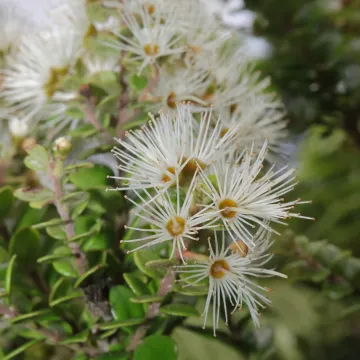
The plant is botanically distinguished by its small, dark green, leathery, and opposite leaves. A diagnostic feature, which gives the species its scientific name, is the presence of numerous small pellucid glands on the leaf surface, which appear as tiny "perforations" when held against a source of light. During the flowering season, the plant produces dense clusters of white or pink-tinged flowers with prominent stamens.
Regarding cultivation, Metrosideros perforata requires well-drained, fertile soil that maintains consistent moisture. It performs best in mild, maritime climates. While it can tolerate a variety of light conditions, it prefers a semi-shaded spot for root development while allowing the foliage to reach for brighter areas. Regular pruning helps in maintaining the desired shape and density of the vine.
The plant is highly valued for its ornamental applications in landscaping.
- Ideal for vertical greening of walls and fences.
- Excellent groundcover for rocky slopes.
- Suitable for conservatory or container gardening in cooler zones.
Typical pests include scale insects and mealybugs, which are often attracted to the lush foliage if airflow is poor. Diseases such as root rot can occur if the soil is waterlogged for extended periods. Providing a well-aerated substrate and avoiding excessive overhead watering are essential management practices to keep the plant in optimal condition.
Photo gallery