Kermadec pohutukawa
Metrosideros kermadecensis
Description
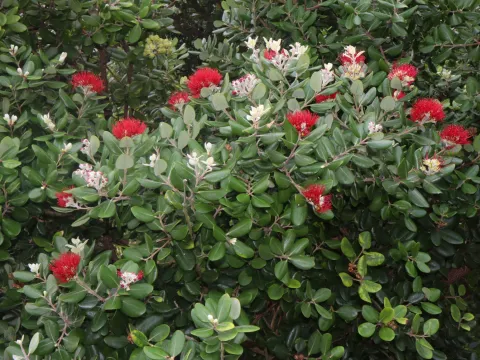
The Kermadec pohutukawa (Metrosideros kermadecensis) is a distinctive evergreen tree or shrub belonging to the Myrtaceae family. Originally hailing from the Kermadec Islands in the South Pacific, this species is highly valued for its dense, glossy foliage and vibrant red flowers. It is widely recognized for its robust nature and ability to thrive in challenging maritime environments.
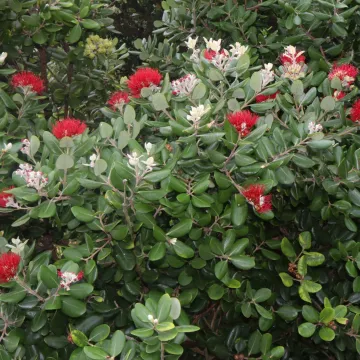
Botanically, this species is characterized by its thick, oval-shaped leathery leaves. The underside of these leaves is covered in fine, silky white to grey hairs, which provides a unique texture. The most striking feature of the plant is its intense red, brush-like flowers consisting of numerous long stamens that bloom in dense terminal clusters, making it a standout in any botanical collection.
Regarding climatic requirements, the plant is best suited for mild, frost-free maritime regions. It thrives in full sunlight and is known for its remarkable tolerance to salt spray and wind. While it can reach significant sizes in its native habitat, in cooler temperate zones, it is typically managed as a container plant that must be brought indoors or into a greenhouse during cold winter months.
The cultivation of Metrosideros kermadecensis requires well-draining, slightly acidic to neutral soil. Watering should be consistent, ensuring the soil remains moist but never waterlogged. During the growing season, a balanced fertilizer application helps support prolific blooming. Pruning is essential for maintaining a desirable shape and promoting denser foliage growth after the flowering season concludes.
In terms of agricultural and horticultural use, this plant is primarily utilized for aesthetic landscaping and as a specimen plant in warm climates. While generally resistant to many pests, growers should remain vigilant for signs of scale insects or spider mites, particularly in indoor environments. Ensuring proper airflow and avoiding excessive humidity are the most effective strategies for preventing common fungal diseases that can affect the root system.
Photo gallery