
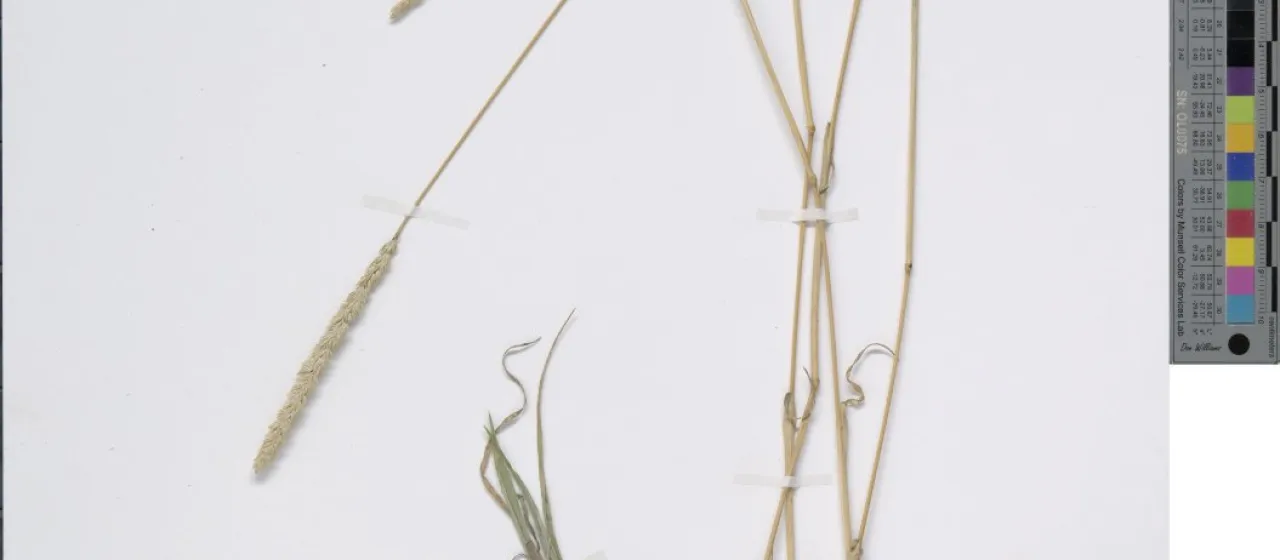
Description
Koeleria crassipes is a perennial herb belonging to the Poaceae (grass) family. This species is known for its remarkable resilience and ability to thrive in challenging environmental conditions, making it an object of interest for agronomists focusing on land reclamation and forage development in arid regions.
The plant originates from the arid and semi-arid regions of Central Asia. Its natural habitat includes rocky slopes, sand dunes, and dry steppe areas. Because of its evolutionary background, Koeleria crassipes is perfectly adapted to survive in areas with extreme temperature fluctuations and limited seasonal rainfall.
Botanically, it forms dense, compact tufts of narrow, often involute leaves that are highly efficient at water retention. The stem is upright, culminating in a dense, spike-like panicle. This structure is a primary adaptation to ensure reproductive success in windy, open environments while minimizing surface exposure for transpiration.
Regarding cultivation, Koeleria crassipes requires well-drained, sandy, or rocky soil substrates. It is a classic xerophyte, meaning it is highly drought-tolerant. Agrotechnical management should be minimal, focusing on preserving soil structure and avoiding irrigation, as the plant is not adapted to moist, heavy soils which can lead to root system degradation.
The agricultural and economic utility of this species includes:
- Soil stabilization and erosion control in desertified areas.
- Restoration of native pastures in semi-arid environments.
- Use in sustainable landscaping for dry, low-maintenance zones.
- Ecological monitoring and biodiversity maintenance in steppe regions.
This grass is notably robust against common agricultural pests and diseases. Most issues arise only when the plant is grown in unsuitable, waterlogged environments, which predisposes it to fungal pathogens. Generally, it requires no chemical intervention, relying on its inherent genetic resistance to survive environmental pressures.