
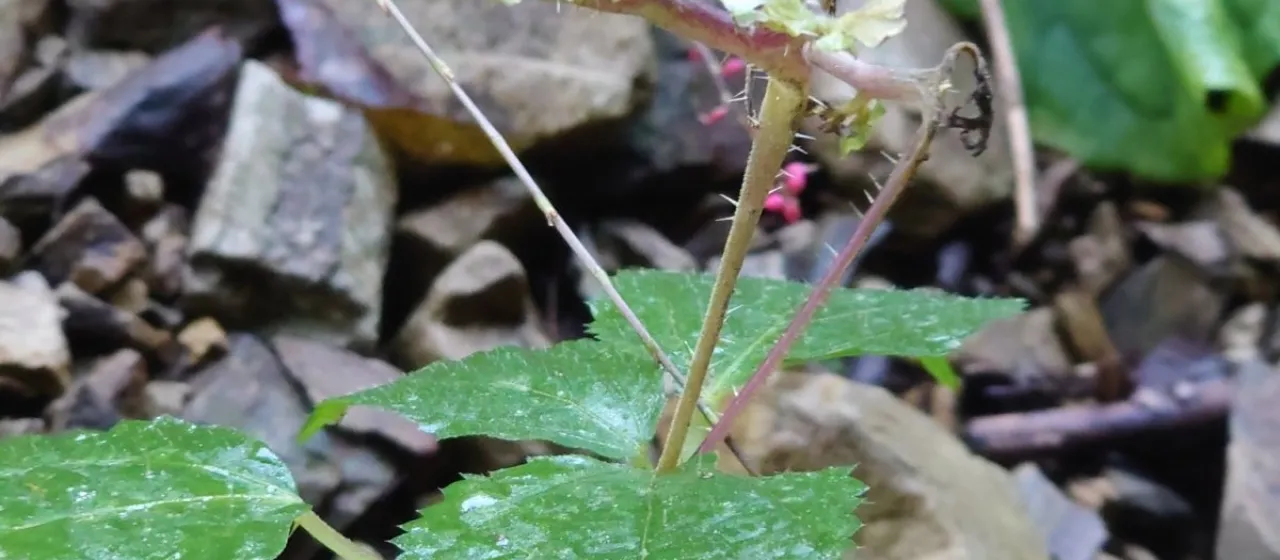
Description
Laportea bulbifera, commonly known as the bulb-bearing nettle, is a perennial herbaceous plant belonging to the Urticaceae family. This species is unique among its relatives due to its distinct method of vegetative propagation, which involves the development of specialized bulbils in the leaf axils.
The plant originates from the forest regions of East Asia, including parts of China, Japan, Korea, and the Russian Far East. Its natural habitat consists of moist, shaded areas with nutrient-rich, humus-heavy soils, which defines the environment necessary for successful propagation in agricultural or garden settings.
Morphologically, Laportea bulbifera features an upright stem covered in stinging hairs that serve as a defense mechanism against herbivores. The most remarkable feature is the production of small, detachable bulbils. These structures fall to the ground and develop into new plants, allowing for rapid colonization of suitable habitats.
Cultivation requires conditions that mimic its native forest floor: partial to full shade, high humidity, and consistent soil moisture. Farmers should focus on organic mulch application to retain water and maintain soil temperature. Although the plant is hardy, it is sensitive to drought and intense, direct sunlight, which can cause leaf scorch and reduced productivity.
In terms of economic use, Laportea bulbifera is primarily valued as an edible wild plant. Its young leaves and shoots are harvested in spring and cooked to neutralize the stinging trichomes, offering a nutritious green leafy vegetable. Research into its biochemical properties also suggests potential benefits in medicinal applications due to its dense nutrient profile.
- Thrives in shade and high-humidity environments.
- Propagates efficiently via axillary bulbils.
- Requires protection from direct midday sun.
- Excellent candidate for forest gardening or specialized nurseries.