
Description
Leonotis intermedia is a perennial herbaceous plant belonging to the Lamiaceae family. It is recognized for its structural beauty and vibrant, tubular flowers, which are typical for its genus. While it is less commonly found in commercial agriculture than related species, it is highly valued by horticulturists for its architectural impact in dryland gardening.
Originating from Southern Africa, this species thrives in regions with intense light and moderate humidity. It is an excellent example of a plant adapted to environments with distinct dry seasons. Its natural distribution is largely centered in areas where it can utilize full sun exposure, making it an ideal choice for xeriscaping or low-maintenance flower beds in Mediterranean climates.
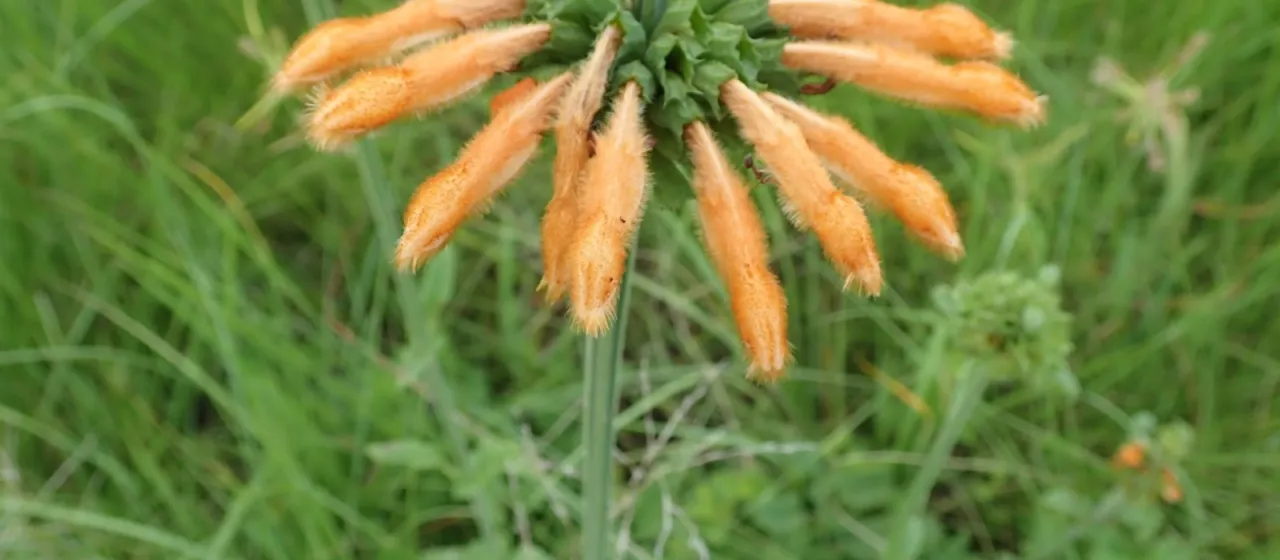
Botanically, Leonotis intermedia develops rigid, square-shaped stems and serrated leaves. The most defining feature is the inflorescence, characterized by dense, globose whorls of brightly colored flowers that appear in orange to reddish tones. The plant can reach a height of approximately 1.5 to 2 meters under favorable growing conditions, forming a significant upright presence in any landscape.
Agronomic management relies on providing optimal soil conditions, specifically ensuring excellent drainage. It performs best in nutrient-rich, well-aerated soil. Overwatering is the primary cause of failure, as the root system is sensitive to waterlogging. Fertilization should be moderate, focusing on supporting vegetative growth early in the season and flowering potential as the buds develop.
In terms of practical utility, the plant is primarily cultivated for aesthetic purposes and ecological benefits. It serves as a potent nectar source for bees, butterflies, and other essential pollinators. While it is relatively resilient, growers should monitor for common pests such as aphids and spider mites, and implement preventative measures against root rot, which typically occurs if soil drainage is insufficient.