
Description
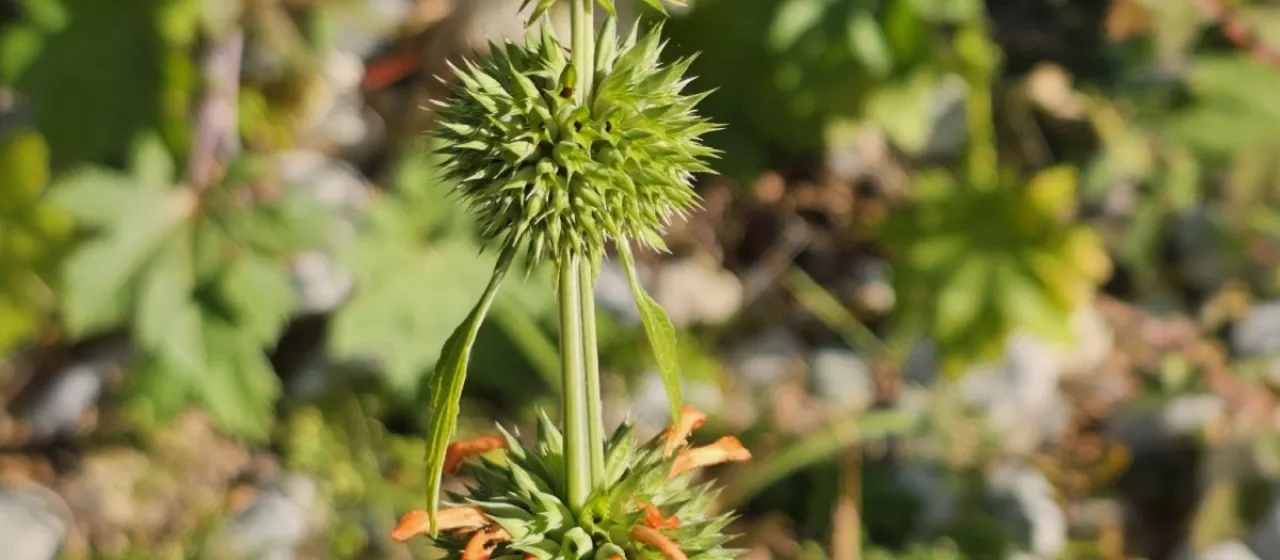
Lion's ear (Leonotis nepetifolia) is an impressive annual herbaceous species within the Lamiaceae family. Known for its unique, multi-layered spherical flower heads, the plant gets its common name from the distinct resemblance of its orange blossoms to the tuft on a lion's tail.
Native to tropical Africa and India, this species has successfully adapted to various subtropical and tropical regions globally. In temperate zones, it is widely grown as an annual ornamental plant. It thrives in full sun exposure, which is critical for the development of its signature flowering stalks that can reach significant heights.
Botanically, Leonotis nepetifolia is characterized by robust, square-sectioned stems typical of the mint family, growing upwards to 2–2.5 meters. The foliage is serrated and broad, providing a lush green background for the vibrant, tubular flowers. The flowering period is prolonged, often lasting from mid-summer until the first frost in cooler climates.
From an agronomical perspective, successful cultivation requires well-draining soil with a moderate nutrient profile. While the plant is notably drought-tolerant once established, supplemental irrigation is recommended during the initial growth stages to ensure height. Minimal fertilizer application is needed, as excessive nitrogen can lead to excessive foliage growth at the expense of floral development.
The primary utility of this plant is ornamental, serving as a dramatic feature plant in garden borders or meadow-style plantings. Furthermore, it is a highly regarded nectar source for pollinators, including bees and hummingbirds in native ranges. While generally resilient, gardeners should monitor for common pests such as aphids or whiteflies, particularly during humid weather conditions.
- Propagation: Sow seeds indoors or directly in warm soil.
- Spacing: Allow at least 60–90 cm between plants for air circulation.
- Maintenance: Deadheading can encourage minor late-season blooming.
- Soil pH: Prefers neutral or slightly acidic conditions.