
Description
Lion's ear (Leonotis leonurus) is a perennial shrub belonging to the Lamiaceae family. It is a highly valued plant in both horticulture and medicinal herbal production due to its unique physical characteristics and chemical compounds found within its leaves and flowers.
The plant originates from South Africa, where it thrives in diverse habitats ranging from grasslands to rocky slopes. In agricultural practice, it is widely grown in subtropical and warm-temperate regions. Because the plant is frost-tender, cultivation in colder climates requires greenhouse conditions or annual rotation.
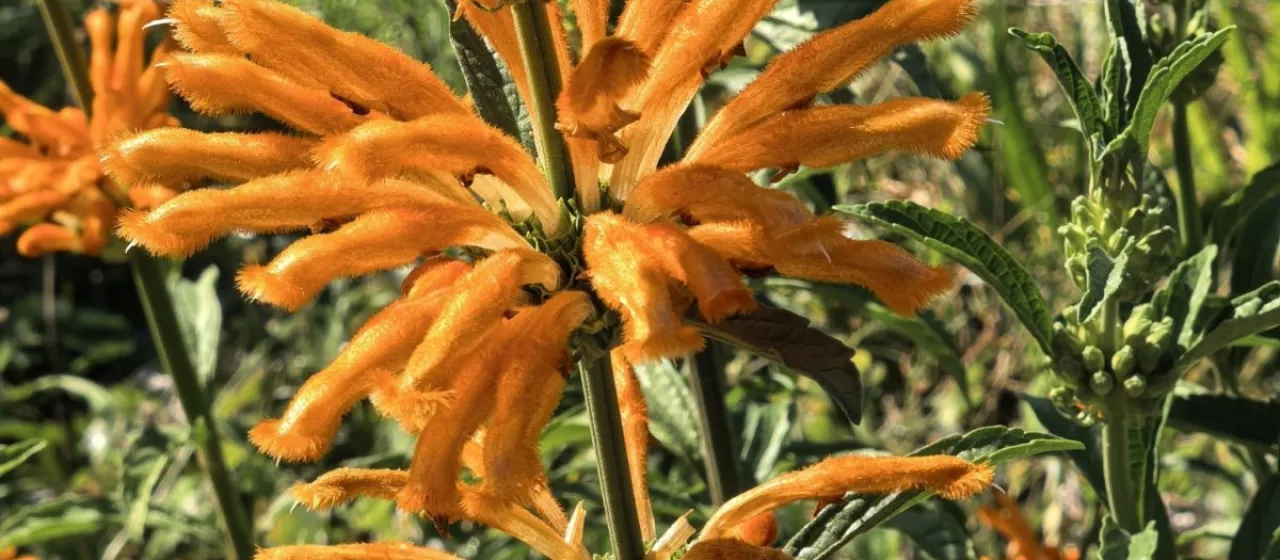
Botanically, Leonotis leonurus is defined by its tall, square stems that can grow up to 2 meters in height. Its leaves are opposite, serrated, and lance-shaped. The defining feature is the striking, whorled clusters of orange, velvet-textured tubular flowers that bloom at the top of the plant, often compared to a lion's mane.
Agricultural requirements include well-draining, nutrient-rich soil and full sun exposure. While the plant is drought-tolerant once established, optimal growth for biomass or flower production requires consistent irrigation throughout the growing season. Applying a balanced nitrogen-potassium fertilizer helps ensure healthy vegetative growth and abundant flowering.
The primary agricultural use for Lion's ear includes its application as an ornamental shrub in landscape design and as a botanical source for herbal extracts. Its sedative and antispasmodic properties make it a subject of interest for small-scale pharmaceutical farming, requiring careful harvesting at the peak of the flowering stage.
- Requires well-drained sandy or loamy soil.
- Propagation primarily through seeds or softwood cuttings.
- Regular pruning is necessary to maintain shape and yield.
- High tolerance to warm weather and direct heat.
Pest management for this crop focuses on monitoring for aphids, whiteflies, and spider mites, which can thrive in greenhouse environments. Diseases are generally rare if proper air circulation is maintained and waterlogging is prevented, as the root system is highly susceptible to fungal pathogens in damp conditions.