
Description
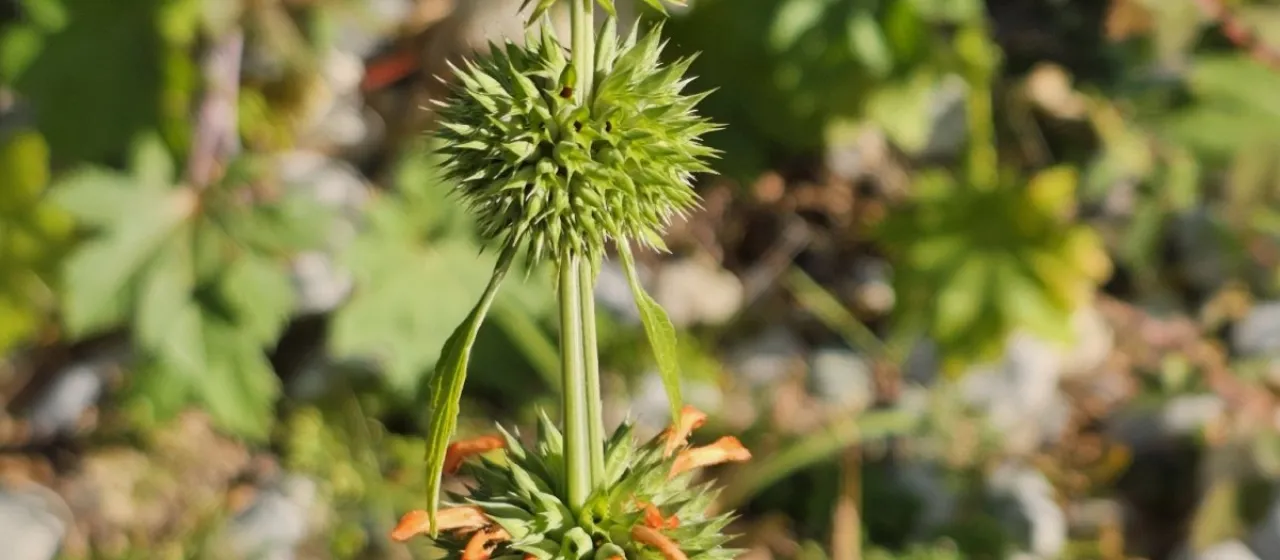
Lion's ear (Leonotis nepetaefolia) is a tall annual herbaceous plant belonging to the Lamiaceae family. Often referred to as «klip dagga» or «lion's tail,» this plant is widely recognized for its striking, globe-shaped clusters of bright orange, tubular flowers that appear on stiff, square-shaped stems during the summer months.
The plant is native to tropical Africa and India but has become naturalized in many tropical and subtropical regions around the world. Due to its vigorous growth habit, it is often cultivated as an ornamental annual in temperate climates or grown as a container plant where seasonal changes necessitate protection from frost.
Botanically, Leonotis nepetaefolia can reach heights of up to 3 meters, making it an excellent focal point in a garden bed. Its leaves are opposite, ovate-lanceolate, and serrated, providing a lush green backdrop to the brilliant, fuzzy orange blooms. The plant is highly attractive to hummingbirds, bees, and butterflies, making it a valuable addition to pollinator-friendly garden designs.
Agricultural requirements include full sun exposure and well-drained soil. It is relatively drought-tolerant once established but performs best with regular watering during the peak growing season. When sowing seeds, it is recommended to start indoors about 6-8 weeks before the last frost date. The plant prefers fertile, loamy soil, though it can tolerate a variety of soil types as long as drainage is sufficient to prevent root rot.
Common uses are primarily ornamental, ranging from landscaping large garden beds to serving as architectural height in borders. Regarding plant health, Leonotis nepetaefolia is occasionally susceptible to common garden pests such as aphids, whiteflies, and spider mites, particularly in greenhouse or sheltered conditions. Proper spacing and airflow are essential to prevent fungal issues caused by stagnant humidity.