
Description
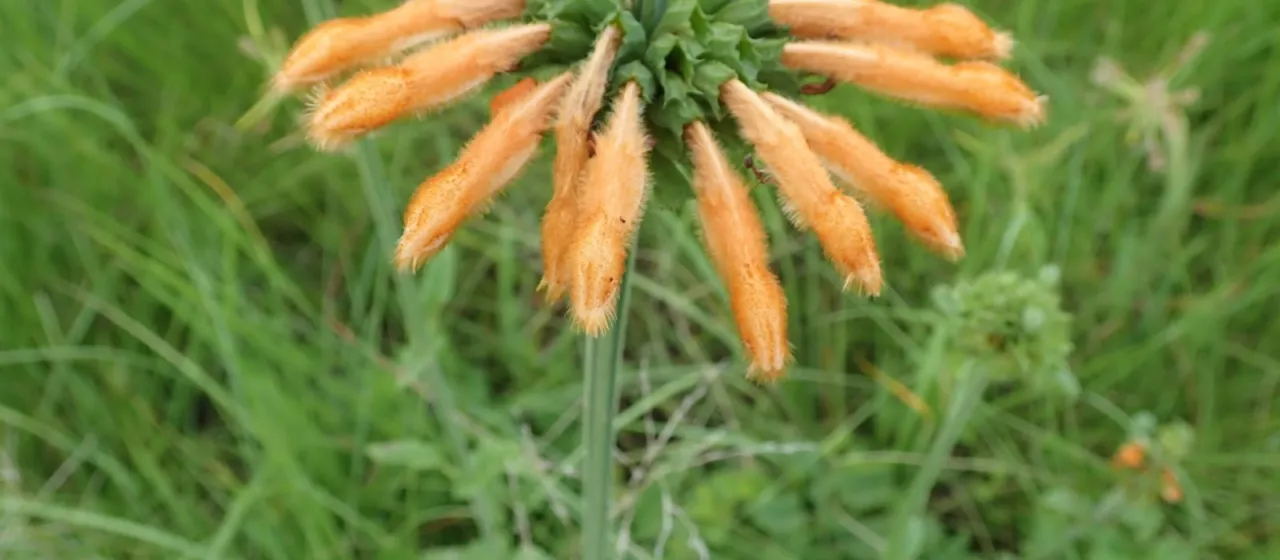
Leonotis mollissima is a perennial subshrub belonging to the Lamiaceae family. It is recognized for its unique, velvet-textured foliage and striking, whorled flower clusters, which provide significant aesthetic value to gardens and landscapes.
The plant originates from Southern Africa, thriving in open, sun-drenched environments. Its natural habitat includes diverse regions where temperatures remain mild, which dictates its distribution in agricultural and gardening practices globally.
Botanically, the species is defined by its pubescent stems and leaves, providing a soft texture. The flowers, typically orange or reddish-orange, grow in dense clusters that are highly attractive to pollinators, particularly bees and butterflies, playing a role in local biodiversity.
For successful cultivation, the species requires well-drained soil with a neutral to slightly acidic pH. It is a drought-tolerant plant, meaning it thrives in full sun but suffers in waterlogged conditions, which can lead to root rot. Good horticultural practice involves regular pruning to maintain plant vigor and shape.
The primary use of Leonotis mollissima is ornamental, often featured in xeriscaping or as an exotic structural element in borders. While not a conventional industrial crop, it remains a plant of interest in ethnobotanical studies due to the secondary metabolites present in its tissues.
- Requires well-draining soil to prevent fungal infections.
- Best growth observed in USDA zones 9 and above.
- Susceptible to aphids and spider mites if stressed by poor air circulation.