
Description
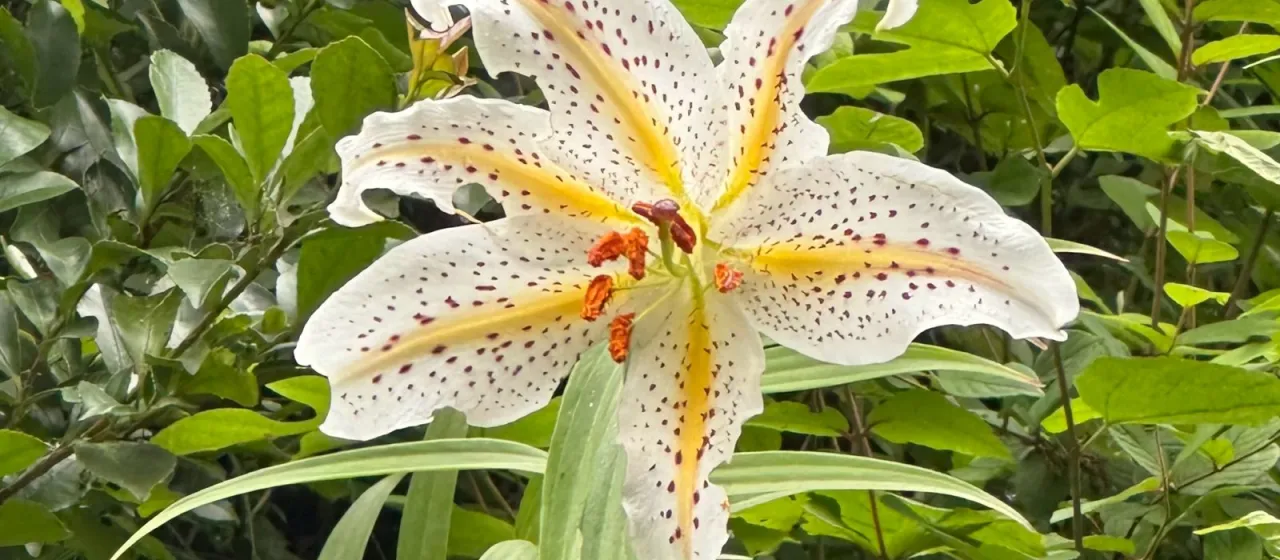
The Goldband lily (Lilium auratum Lindl.) is a prominent bulbous perennial belonging to the Liliaceae family. Known for its massive, fragrant, and heavily spotted flowers, this species is considered one of the most magnificent lilies in the genus and serves as a primary ancestor for many modern Oriental hybrid varieties.
Native to Japan, particularly the island of Honshu, this species naturally inhabits woodland margins and volcanic slopes. Its environmental requirements reflect this heritage, favoring regions with cool root runs and well-drained, porous soils. Successful cultivation relies on replicating these ecological niches within the landscape architecture.
Botanically, the plant is characterized by large, scaly bulbs and robust stems that can reach heights of up to 2 meters. The leaves are lance-shaped and dark green, providing an elegant backdrop for the spectacular blooms. The flowers, typically white with a distinctive central yellow band and crimson spots, open mid-to-late summer.
Key agronomic practices for this species include:
- Providing well-drained, slightly acidic soil enriched with organic leaf mold.
- Ensuring the root zone remains cool, often achieved through dense mulching or companion planting.
- Maintaining consistent soil moisture during the active growth phase.
- Avoiding heavy clay soils that impede drainage and lead to root decay.
In terms of economic utility, Lilium auratum is primarily cultivated for the high-end ornamental flower market and landscape design. Its intense fragrance and dramatic visual appeal make it a popular choice for specialist nurseries. Furthermore, its genetic contribution is invaluable for breeding programs focused on large-flowered, scented lilies suited for cut flower production.
The plant is susceptible to various pathogens if cultural conditions are not met, most notably Botrytis blight and Fusarium bulb rot, which are often exacerbated by poor ventilation and excess moisture. Common pests include the lily beetle (Lilioceris lilii) and bulb mites. Integrated pest management strategies, including careful bulb inspection and localized treatment, are essential for successful maintenance.