
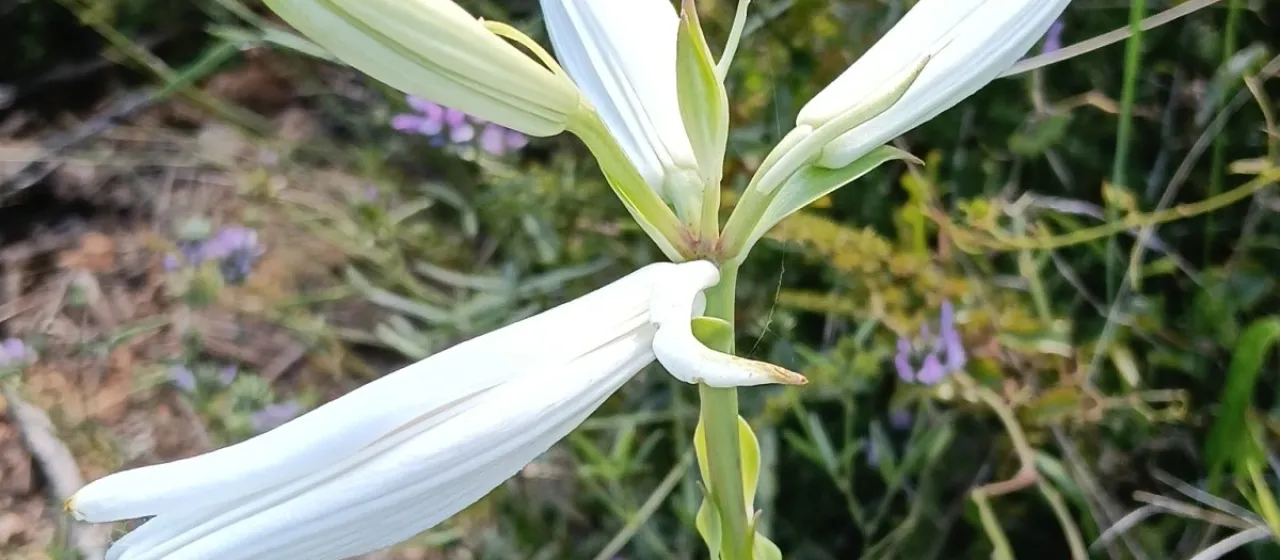
Description
The Madonna lily (Lilium candidum L.) is a perennial bulbous plant belonging to the Liliaceae family. It is recognized for its iconic, fragrant, trumpet-shaped white flowers with prominent yellow anthers, which grow on tall, sturdy stems, making it one of the most culturally significant lily species in history.
Originating from the Eastern Mediterranean region and the Balkans, the Madonna lily has been cultivated for centuries across temperate zones worldwide. As an agricultural crop, it is highly valued for its ornamental beauty and early-summer blooming cycle, which distinguishes it from many other lily hybrids found in modern commercial gardens.
Botanically, the plant is characterized by its white, scale-covered bulbs that lack a tunic, and its unique growth pattern of producing a rosette of basal leaves in the autumn. This growth habit requires specialized attention to ensure the plant remains hardy during the winter months, typically reaching a height of up to 1.2 meters.
Cultivation requirements necessitate well-draining, neutral to alkaline soil, as the species is intolerant of waterlogged conditions that can cause bulb rot. It performs best in full sun or light shade, requiring minimal fertilization but significant attention to site selection to ensure long-term plant health and vigor.
In terms of agricultural use, it is primarily grown for cut flower production and landscape ornamental design. Producers must monitor for common diseases such as Botrytis blight and Fusarium wilt, as well as pests like the lily beetle (Lilioceris lilii), which can cause severe foliage damage and reduce the overall quality of the flower harvest.