
Description
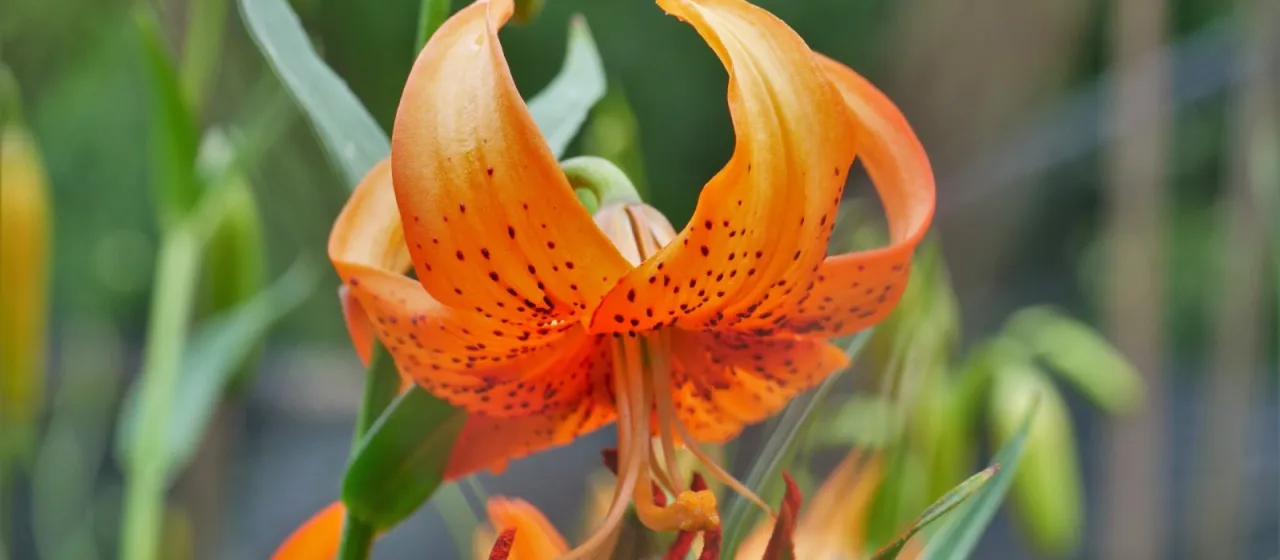
David's Lily (Lilium davidii) is a perennial bulbous plant belonging to the Liliaceae family. It is highly regarded in horticulture for its graceful, nodding flowers that exhibit vibrant orange-red petals covered with prominent dark spots, mounted on tall, sturdy stems that can grow up to 1.5 meters.
The species originates from the mountainous regions of Western China. It is naturally adapted to cool, well-drained slopes and open scrubland. Its rugged background makes it a resilient choice for gardeners in temperate climates, where it can thrive with minimal specialized protection if conditions are met.
Botanically, the plant is characterized by its numerous narrow, grass-like leaves densely packed along the stem. The bulb is typically white and globular, possessing the ability to produce stolons, which allows the plant to spread effectively over time. Blooming usually occurs in mid-summer, showcasing a spectacular display of multiple pendant blossoms.
Successful cultivation requires soil that is rich in organic matter and offers excellent drainage to prevent bulb rot. It prefers a position in full sun, though the base of the plant benefits from some shade to keep the root zone cool. Regular monitoring of moisture levels is crucial, as the plant dislikes waterlogged conditions during dormancy.
In landscaping, David's Lily is primarily used for ornamental purposes in perennial borders and cottage garden designs. Its height and structural beauty provide vertical interest, making it a favorite for naturalistic planting schemes. It also serves as a vital genetic resource for plant breeders focusing on species-specific resilience.
- Thrives in well-drained, humus-rich soil conditions.
- Requires minimal intervention once established.
- Susceptible to Botrytis blight if air circulation is poor.
- Watch for common lily pests like the scarlet lily beetle.