
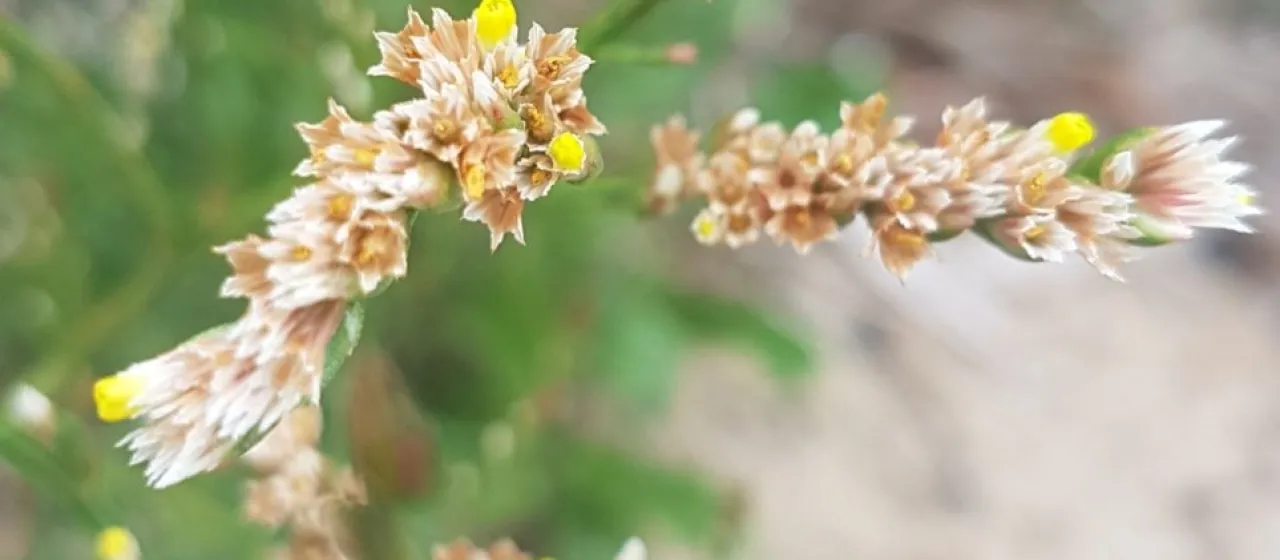
Description
Southern sea lavender (Limonium australe) is a perennial herbaceous plant classified within the Plumbaginaceae family. As a specialized halophytic species, this plant exhibits remarkable biological adaptations that allow it to thrive in saline environments, such as coastal salt marshes and sandy maritime dunes, where agricultural potential for other crops is typically limited.
The plant originates from the coastal regions of Australia and surrounding Pacific islands. It has evolved over centuries to withstand high salinity, intense solar radiation, and the abrasive force of salt-laden coastal winds. Its geographical distribution reflects its high resilience and ability to colonize extreme ecological zones.
Botanically, it features a dense basal rosette of coriaceous, thick leaves, which are structurally designed to retain moisture and limit transpiration. The inflorescence consists of small, numerous flowers arranged on branched panicles. The durability of these flower stalks makes the plant highly attractive for the commercial floral industry, specifically as a dried flower.
Cultivation requires well-draining, porous soil, as root asphyxiation is a common risk in waterlogged clay environments. It is a drought-tolerant crop once established and thrives in full sun. Essential horticultural practices include monitoring for soil pH, maintaining sparse irrigation cycles, and ensuring adequate airflow to prevent the development of powdery mildew or other fungal pathogens.
The primary economic value of Limonium australe is found in landscape architecture, particularly for seaside garden design and soil stabilization efforts. It also serves as an important genetic resource for breeding salt-tolerant ornamental varieties. Common pests affecting this crop include aphids, which often cluster on the developing flower stems during periods of rapid spring growth.